


De Quervain
Syndrome
Pain along the thumb side of the wrist can gradually make simple tasks uncomfortable. Patients often notice difficulty while lifting a child, holding a phone, opening jars, or turning keys.
These movements rely heavily on the tendons that control thumb motion. When these tendons become inflamed, movement becomes painful and restricted, a condition known as De Quervain Syndrome.
Many individuals seeking De Quervain Syndrome treatment in Dubai initially try rest or wrist braces, but symptoms may persist.
Dr. Ehab Aldlyami takes a close look at each patient’s condition to figure out whether non-surgical care or surgery is the right way to go. The goal is always the same, bring down the inflammation, get the tendon moving properly again, and help you get back to using your hand normally and comfortably.
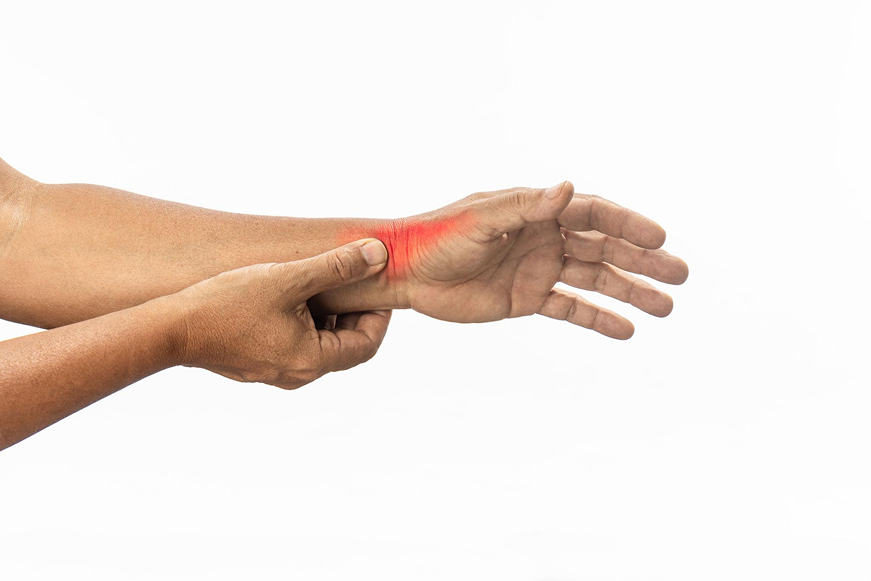
What is De Quervain Syndrome?
De Quervain’s syndrome is a condition where two tendons in your thumb the abductor pollicis longus and extensor pollicis brevis, become inflamed. These tendons run through a small tunnel at the wrist, and when the tissue surrounding them gets irritated or thickened, they can no longer glide freely. This is what causes the pain and stiffness you feel.
This condition usually develops gradually and may worsen with repeated thumb movement. Over time, swelling increases and motion becomes more restricted.
Patients with De Quervain Syndrome commonly experience:
- Painful sensation at the base of your thumb that gets worse when you move it
- Swelling along the thumb side of your wrist
- Trouble gripping or pinching things
- Limited thumb movement
- A clicking or catching feeling when you move your thumb
- Pain that spreads up toward your forearm
Types and classification of De Quervain Syndrome
Although often grouped as one condition, De Quervain Syndrome may present in different forms depending on severity and anatomy.
Type | Description | Clinical pattern | Treatment direction |
Acute inflammatory | Early tendon irritation | Mild pain, minimal swelling | Conservative care |
Stenosing type | Thickened tendon sheath | Pain with movement | Injection therapy |
Chronic fibrotic | Long-standing narrowing | Severe pain, stiffness | Surgical release |
Septated compartment | Anatomical variation | Persistent symptoms | Often surgical |
Identifying the type helps guide the most effective De Quervain Syndrome treatment in Dubai.
Common causes and contributing factors
The condition usually develops from repetitive strain that keeps irritating the tendon over time. All that constant friction causes the tendon to rub against its covering, which eventually makes the sheath swollen and tight.
Common contributing factors include:
- Repeating the same thumb and wrist movements over and over
- Frequently picking up or lifting babies and young children
- Spending a lot of time on your smartphone
- Long hours of typing or using a mouse
- Hand-heavy work that involves a lot of gripping or twisting
- A past wrist injury or trauma
Symptoms usually appear gradually rather than suddenly.
Symptoms that may indicate De Quervain Syndrome
Patients are generally advised to seek evaluation when symptoms begin interfering with daily tasks. Early treatment helps prevent progression and reduces recovery time.
You may benefit from De Quervain Syndrome treatment in Dubai if you experience:
- Persistent wrist pain near the thumb
- Swelling that does not improve with rest
- Difficulty holding or lifting objects
- Reduced thumb strength
- Pain during twisting motions
- Symptoms lasting more than two weeks

How is De Quervain Syndrome diagnosed?
Diagnosis is primarily based on clinical examination. Dr. Ehab Aldlyami evaluates tenderness, swelling, and thumb mobility. A commonly used clinical assessment is the Finkelstein test, where the thumb is placed inside the palm and the wrist is gently bent. Pain during this maneuver strongly suggests De Quervain Syndrome.
Imaging isn’t always needed, but in some cases it can be really helpful. An ultrasound can show if the tendon is thickened or inflamed. An X-ray may be done to rule out arthritis. And in more long-standing or complicated cases, an MRI might be used to get a closer look at the tendon.
Accurate diagnosis ensures that the most appropriate De Quervain Syndrome treatment in Dubai is selected.
Is De Quervain Syndrome the same as De Quervain’s Tendinosis?
The terms are often used interchangeably, but they are not exactly the same. De Quervain Syndrome is the broader condition describing pain and restricted thumb movement caused by irritation of the tendons at the wrist. De Quervain’s tendinosis refers to a more chronic stage, where the tendon sheath becomes thickened and less flexible.
In simple terms:
- De Quervain Syndrome refers to the overall condition
- Tendinosis refers to chronic thickening of the tendon sheath
- Early cases are more inflammatory and may respond to conservative treatment
- Tendinosis usually develops in long-standing cases
- In chronic tendinosis conditions De Quervain Syndrome treatment surgery may be required.
Understanding this difference helps determine whether conservative care or surgical release is the most appropriate treatment.
De Quervain Syndrome Treatment in Dubai
Treatment depends on symptom severity and duration. Dr. Ehab Aldlyami typically begins with conservative options before considering De Quervain Syndrome treatment surgery.
Non-surgical treatment
Conservative management focuses on reducing inflammation and allowing tendons to glide smoothly again.
- Splints are used to immobilize the thumb and wrist temporarily, reducing mechanical irritation.
- Anti-inflammatory medications may help relieve swelling and discomfort. Activity modification plays an important role, especially in avoiding repetitive thumb movement.
- Hand therapy may be recommended once pain improves. Gentle stretching and strengthening exercises help restore movement.
- Corticosteroid injections are often used when symptoms persist. These injections reduce inflammation around the tendon sheath. Studies suggest that corticosteroid injections provide relief in 50–80% of patients, particularly when administered early.
When is De Quervain Syndrome Treatment Surgery recommended?
Surgery is usually considered when conservative treatments such as splinting, medications, or corticosteroid injections do not provide sufficient relief. It may also be recommended in cases where symptoms are severe, long-standing, or significantly affecting daily hand function.
Patients who may require De Quervain Syndrome treatment surgery often experience:
- Persistent pain despite non-surgical treatment
- Difficulty performing routine activities like gripping or lifting
- Limited thumb movement due to tendon restriction
- Recurring symptoms that interfere with work or daily tasks
- Chronic cases where the tendon sheath has thickened
In such situations, surgical treatments can helps address the root cause of the condition rather than just managing symptoms.
De Quervain Syndrome Treatment Surgery: Procedure steps
The procedure is a minor, well-established outpatient surgery performed under local anesthesia. It focuses on releasing the tight tendon sheath to restore smooth movement.
The surgical steps typically include:
- The wrist area is numbed using local anesthesia to ensure comfort
- A small incision is made over the affected tendon compartment
- The thickened sheath surrounding the tendons is carefully released
- This creates more space, allowing the tendons to glide freely
- The incision is closed with sutures and covered with a light dressing
The procedure usually takes around 20–30 minutes. Most patients are discharged the same day, and surgical release has a success rate of over 90%, particularly in chronic or resistant cases.
Recovery timeline
Recovery is usually smooth, with gradual improvement in pain and thumb movement over a few weeks.
- First few days: Mild swelling and soreness, hand elevation helps.
- 1 week: Gentle thumb movement begins comfortably.
- 10-14 days: Stitches removed, healing improves.
- 2-3 weeks: Light daily activities become easier.
- 4-6 weeks: Normal strength and movement return.
Why choose Dr. Ehab Aldlyami for De Quervain Syndrome Treatment in Dubai?
Choosing the right specialist is important when dealing with hand and wrist conditions, especially when symptoms affect daily activities. Dr. Ehab Aldlyami focuses on accurate diagnosis, conservative-first treatment, and functional recovery tailored to each patient.
- Specialized hand & wrist expertise – Focused evaluation of thumb tendon conditions to ensure precise diagnosis and appropriate treatment planning.
- Conservative-first approach – Non-surgical options such as splinting, therapy, and injections are considered before recommending surgery.
- Minimally invasive surgical technique – When required, De Quervain Syndrome treatment surgery is performed using small incisions to reduce tissue trauma.
- Individualized treatment plans – Care is tailored based on symptom severity, occupation, and lifestyle demands.
De Quervain’s syndrome can make simple everyday hand movements really difficult, but getting the right care early on can make a big difference. Dr. Ehab Aldlyami provides both non-surgical and surgical treatment options, depending on how severe your symptoms are and what works best for you.
Patients seeking De Quervain Syndrome treatment in Dubai can expect a focused, patient-centered approach aimed at relieving pain and restoring mobility.
Book your appointment with Dr. Ehab Aldlyami to discuss the most suitable treatment for your condition.
FAQs
De Quervain’s syndrome usually develops when you repeatedly move your thumb and wrist in the same way over and over, which ends up irritating the tendon sheath. Everyday things like lifting, typing, or even being on your phone a lot can slowly build up inflammation and start causing pain over time.
Surgery is usually the next step when splints, medicines, and injections just aren’t doing enough to help. If you’ve been dealing with ongoing pain, trouble moving your thumb, or the problem has been dragging on for a long time, surgery for De Quervain’s syndrome may be the best option to finally get you some relief.
Recovery time depends on which treatment you had. Most people are able to get back to light daily activities within a couple of weeks or so. As for getting your full strength back and being able to move your thumb comfortably again, that usually happens somewhere between four to six weeks.
Yes, many early cases get better with simple treatments like rest, wearing a splint, and getting a steroid injection. But if the problem has been there for a long time and the tendon has become thicker, a small surgery may be needed to give you lasting relief.
Patients should stay away from repeatedly gripping things, lifting anything heavy, or moving their thumb too much while they’re recovering. Giving your wrist a break goes a long way in cutting down inflammation and letting things heal properly.