


Ganglions
If you notice a lump on your wrist or hand, it’s natural to feel concerned. Most of these swellings are ganglion cysts, which are harmless and not cancerous. Still, they can be uncomfortable and sometimes get in the way of daily activities.
To manage symptoms effectively and restore full function, expert evaluation is essential, especially when considering the most appropriate ganglions treatment in Dubai.
Dr. Ehab Aldlyami is a UK-trained consultant orthopedic surgeon specializing in hand and wrist conditions in Dubai. With over 20 years of experience, he offers tailored care, whether your ganglion cyst requires observation, aspiration, or precise surgical removal to help restore comfort and function as quickly and safely as possible.
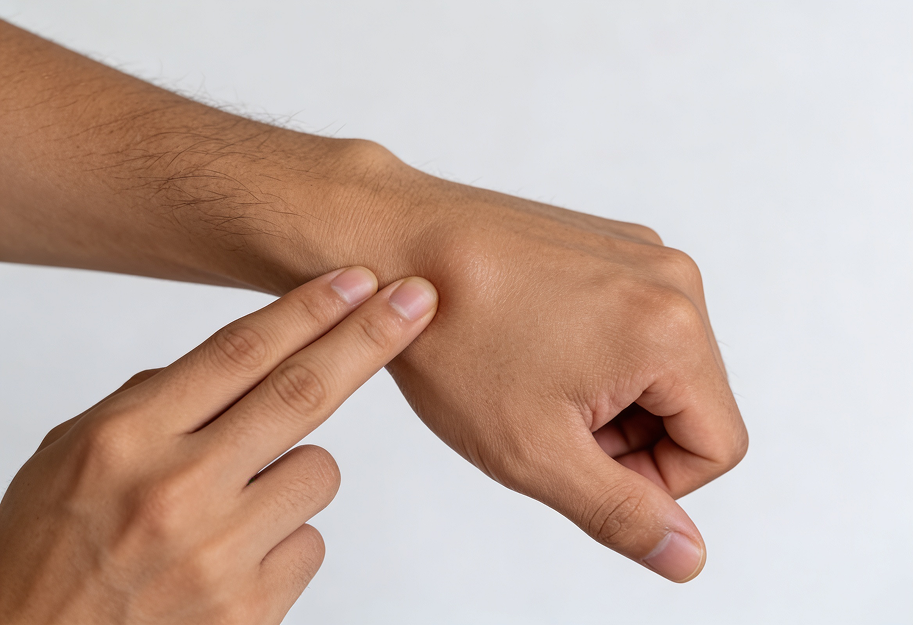
What is a Ganglion Cyst?
Ganglions are fluid-filled sacs that usually form near joints or tendons, most often in the hand and wrist. About 70% of ganglion cysts appear on the wrist. They are usually harmless and painless, but they can cause discomfort if they press on nerves.
These cysts can arise from any joint or tendon in the wrist but are most frequently found on the back of the wrist. They are usually small, though some may grow to the size of a pea or larger, and their size may fluctuate over time.
If a ganglion cyst is attached to a tendon, it can sometimes make the muscle weaker because tendons connect muscles to bones. Some people see one clear lump, while others might have a group of smaller cysts linked to a deeper part of the tissue.
Did you know?
Ganglions are more common in women than in men, and they are most common in people aged 20 to 40.
What causes a Ganglion Cyst?
The exact cause of a ganglion cyst is not always clear. However, it is thought to arise from irritation or degeneration in the joint capsule or tendon sheath, leading to the formation of a fluid-filled sac.
Potential contributing factors include:
- Joint or tendon trauma: Ganglions can form as a result of a wrist injury, such as a sprain or fracture, or from repetitive stress on the wrist joints and tendons.
- Degenerative changes: Soft tissues in joints and tendons can degenerate and break down over time, resulting in the formation of a ganglion.
- Inflammation: Swelling or irritation in the joints or tendons of the wrist can lead to ganglion cysts.
- Hormone changes: Ganglion cysts are sometimes linked to changes in hormone levels, especially in women.
- Genetic factors: Since ganglions tend to be hereditary, there may be a genetic component to their development.
What are the common symptoms to watch for Ganglion Cyst?
Patients seeking ganglion cyst wrist treatment in Dubai often report a variety of symptoms, ranging from purely cosmetic concerns to functional limitations:
- A swelling or lump that is noticeable.
- The lump can change size and even disappear completely before reappearing.
- Typically, the lump is soft and immobile.
- In some cases, the lump may turn out to be painful and aching, especially at the base of the fingers.
- Moving any nearby joints worsens the ache and pain.
- The affected tendon may result in a feeling of muscular weakness.
- The most commonly affected areas are the backs of the hands and wrists, back of the knee, ankle, foot, palm, and fingers, among other locations.
Advanced diagnosis: How are Ganglions diagnosed?
Accurate diagnosis is essential to confirm that a lump is a ganglion cyst and to rule out other conditions. Dr. Ehab Aldlyami uses a careful, step-by-step approach to ensure clarity and reassurance.
Diagnostic methods may include:
- Medical history: Understanding your symptoms, duration, and any prior injuries.
- Physical examination: Checking the size, location, and feel of the swelling.
- Imaging: X-rays or ultrasound may help evaluate the joint and rule out other conditions.
- Needle aspiration: Drawing fluid with a fine needle, which can be examined if needed and may also provide symptom relief.
This careful evaluation helps choose the best ganglion treatment in Dubai for your specific situation.
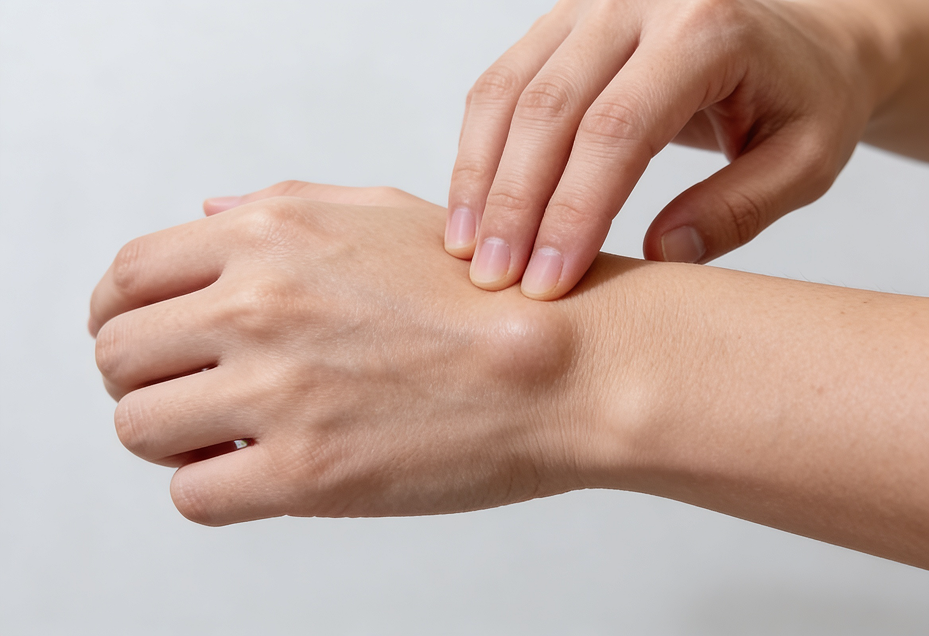
Ganglions treatment in Dubai: A stepwise approach
When it comes to ganglion cyst wrist treatment in Dubai, not all cases require surgery. Dr. Ehab usually begins with conservative treatment whenever possible.
1. Observation (The “wait and see” approach)
Because ganglions are not cancerous and often disappear on their own, Dr. Ehab may recommend simply monitoring the cyst if it is painless and does not interfere with your movement.
2. Immobilization
Using your wrist a lot can make a ganglion cyst bigger. Wearing a wrist brace or splint for a while can help the fluid go back into the joint, making the cyst smaller and easing pressure on the nerves.
3. Aspiration (Non-surgical drainage)
For patients seeking immediate relief without surgery, aspiration is a simple and effective option. Dr. Ehab drains the cyst fluid with a needle after numbing the area. A steroid injection may also be used to reduce recurrence. The procedure is quick and performed in the clinic.
4. Surgery
If the ganglion is causing significant pain or functional impairment or if it has recurred after aspiration, our hand expert may recommend surgical removal of the cyst. Making an incision over the ganglion and removing the cyst and its stalk from the surrounding tissues is the procedure.
Why choose Dr. Ehab Aldlyami for Ganglions treatment in Dubai?
A ganglion cyst might seem like a small problem, but if it causes pain, limits how you move, or keeps coming back, it is important to see a specialist. The right doctor will treat the cyst and also make sure your wrist and hand work well.
Dr. Ehab Aldlyami is a Consultant Hand & Wrist Surgeon and Vice President of the Emirates Hand Surgery Society. He uses his UK training to diagnose and treat hand problems, always aiming to keep your wrist strong, flexible, and working well.
Patients often choose his care for:
- Specialized hand and wrist expertise
- Detailed assessment for accurate diagnosis
- Personalized treatment plans tailored to each patient
- Minimally invasive techniques when appropriate
- Experience treating recurrent cysts
- Clear support throughout recovery and rehabilitation
With a patient-focused approach, Ehab Aldlyami provides trusted ganglion cyst wrist treatment in Dubai, helping patients return to daily activities with greater comfort and confidence.
FAQs
Most procedures, including aspiration and surgery, are performed under anesthesia to ensure comfort. Post-procedure discomfort is typically mild and manageable.
Yes, some ganglion cysts can go away without treatment. However, medical care may be needed if the cyst becomes painful, affects movement, or keeps coming back.
Aspiration has a higher recurrence rate than surgery. However, by removing the “root” of the cyst during surgery, Dr. Ehab significantly reduces the chance of it returning.
No. A ganglion cyst is strictly benign (non-cancerous). It is a fluid-filled sac that does not spread. However, a professional evaluation is important to confirm the diagnosis and rule out other types of hand lumps.
No. You should never attempt to pop the cyst with a needle at home. This can lead to serious infection, injury to the surrounding nerves, and a much higher rate of recurrence.