


Scaphoid
Fracture
Your wrist plays a vital role in almost everything you do, from gripping and lifting to writing and daily tasks. When you sustain a scaphoid fracture, often from a fall onto an outstretched hand, the injury may not seem severe at first. But the concern is real: Will it heal properly?
In many cases, yes, but scaphoid fractures require careful attention. This bone has a limited blood supply, which means healing can be slow or incomplete if the injury is missed or treated incorrectly. That’s why early and accurate scaphoid fracture treatment in Dubai is essential.
Dr. Ehab Aldlyami, a consultant hand & wrist surgeon in Dubai, has advanced experience treating wrist injuries and fractures. Whether your injury needs a cast or surgery, his goal is to help you heal well, regain movement, and get back to your usual activities with confidence.
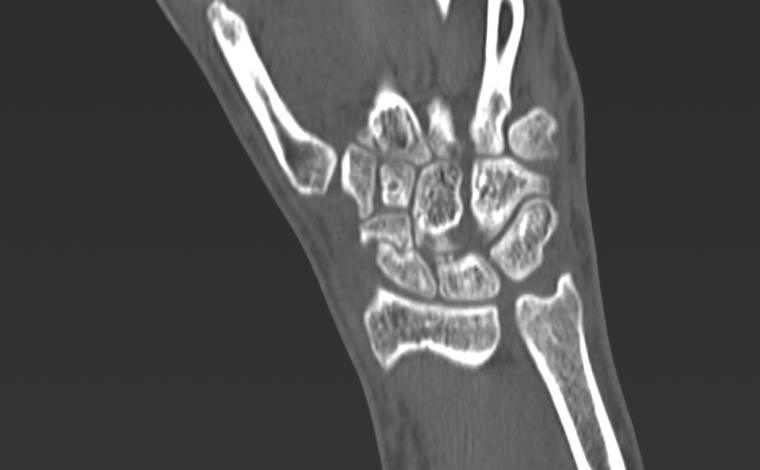
What is a Scaphoid Fracture?
A scaphoid fracture is a break in the scaphoid bone, a small, boat-shaped bone located on the thumb side of your wrist in the area known as the anatomical snuffbox (the hollow you see when you extend your thumb). Although the bone is small, it is the most commonly fractured carpal bone because of its position and its role in absorbing force during a fall.
The scaphoid serves as a crucial link between the two rows of wrist bones, helping coordinate smooth, stable movement. Because of this central role, it contributes to both flexibility and strength in the wrist.
Even a small fracture can disrupt this balance, affecting how your entire wrist moves and functions in everyday activities.
Most scaphoid fractures occur when you fall onto an outstretched hand, placing sudden stress on the wrist. Depending on the location and severity of the break, the injury may be stable or require more advanced treatment to ensure proper healing.
Listen to your wrist: Symptoms of Scaphoid Fracture
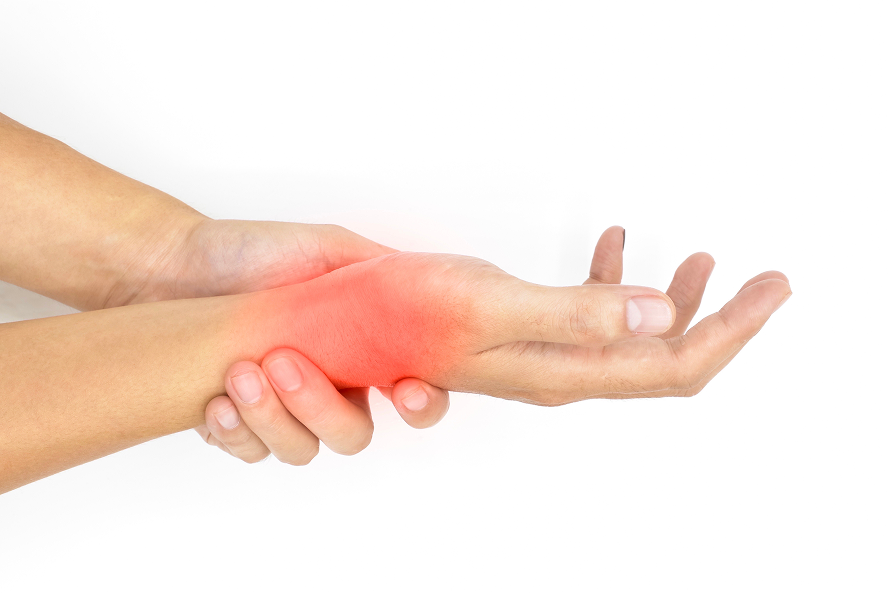
Do not assume wrist pain after a fall is just a sprain. Key warning signs include:
- Pain and tenderness directly over the hollow at the base of the thumb
- Swelling on the thumb side of the wrist
- Weakness when gripping or pinching
- Difficulty gripping objects or pinching with the thumb
- Pain that mimics a wrist sprain but does not improve after 7-10 days
Unlike other fractures, bruising may be absent, leading many people to ignore the injury.
Why it happens: Common causes of Scaphoid Fracture
Most scaphoid fractures occur from a fall onto an outstretched hand, a natural reflex that places sudden force through the wrist, particularly on the thumb side where the scaphoid sits. Because this bone plays a key role in stabilizing the wrist, it absorbs much of the impact during a fall.
However, not every fall leads to a fracture. Factors such as bone strength, activity level, and the force of impact all influence whether the scaphoid breaks.
Common causes of a scaphoid fracture include:
- Falling onto an outstretched hand (the most common cause)
- Sports injuries, especially in activities involving falls or collisions
- Road traffic accidents, including car or motorcycle crashes
- High-impact trauma or sudden force applied to the wrist
- Repetitive stress or strain in athletes, in rare cases
Because these injuries can seem mild at first, scaphoid fractures are often overlooked, making early evaluation important after any wrist injury.
Diagnosis and imaging: Why X-rays might not be enough
One of the biggest dangers of a scaphoid break is that it is often invisible on initial X-rays. This is why many patients are told they have a sprain only to suffer complications months later.
Under the care of a specialist like Dr. Ehab Aldlyami, a “clinical scaphoid fracture” is treated with extreme caution. If X-rays appear normal but pain persists, he utilize advanced imaging:
- MRI: The gold standard for detecting occult (hidden) fractures and assessing the blood supply.
- CT Scan: Used to evaluate the exact alignment of the bone fragments and check for displacement.
Complex cases and late presentations: Addressing non-union
Not all scaphoid fractures are diagnosed early. Some patients present weeks or months after the initial injury, often with ongoing pain or reduced wrist function. These late presentations carry a higher risk of non-union, where the bone fails to heal properly.
Managing these situations requires a more advanced approach. In addition to stabilizing the fracture with a screw, bone grafting may be needed to encourage healing.
This typically uses bone taken from the back of the wrist, which is placed at the fracture site to encourage new bone growth and restore stability.
Scaphoid Fracture treatment in Dubai: Tailoring care based on fracture type
Non-surgical broken scaphoid treatment
For stable, non-displaced fractures located at the distal end of the bone (where blood supply is better), a cast may be used. However, this often requires 6 to 12 weeks of immobilization, which can lead to significant joint stiffness.
Scaphoid surgery: Percutaneous Screw Fixation
For displaced fractures, proximal pole injuries, active individuals, or cases where healing has not occurred, surgery is often recommended.
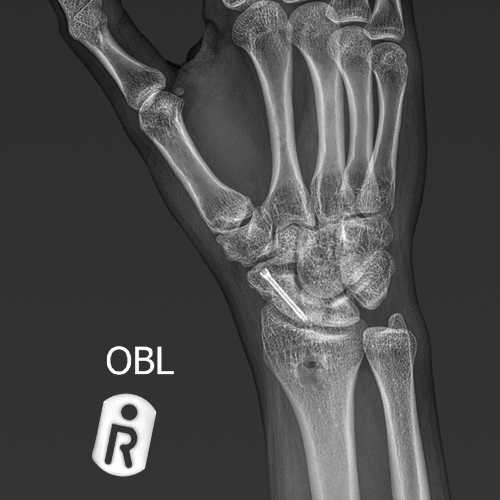
Dr. Aldlyami specializes in Minimally Invasive Percutaneous Screw Fixation, a scaphoid surgery performed through a tiny skin incision, often less than 1 cm. Under X-ray guidance, a single headless compression screw is precisely placed down the central axis of the scaphoid, holding the fragments in perfect position while the bone heals.
Why choose Dr. Ehab Aldlyami for Scaphoid Fracture treatment in Dubai?
When a wrist injury like a scaphoid fracture begins to affect your ability to work, exercise, or manage daily tasks, choosing the right specialist can make a meaningful difference in your fracture recovery.
Dr. Ehab Aldlyami, Consultant Hand & Wrist Surgeon and Vice President of the Emirates Hand Surgery Society, offers advanced expertise in diagnosing and treating scaphoid fractures, with a focus on restoring stability, range of motion, and long-term wrist function.
Patients often choose his care for:
- Specialist focus on hand and wrist conditions
- Ability to detect fractures that may be missed initially
- Treatment plans tailored to individual needs
- Experience with minimally invasive surgical techniques
- Expertise in managing delayed and complex cases
- A structured approach to rehabilitation and recovery
With a precise and compassionate approach, Dr. Ehab Aldlyami provides expert broken scaphoid treatment in Dubai, helping patients return to daily activities with improved strength, stability, and confidence.
Book a consultation today to start your recovery with specialist-led care.
FAQs
An untreated scaphoid fracture has a high risk of developing non-union (where the bone does not heal) and avascular necrosis (loss of blood supply to the bone). These conditions can lead to ongoing pain, wrist arthritis, and reduced function. Early specialist care helps prevent these complications.
The proximal pole is the part of the scaphoid closest to the forearm. Because the blood supply enters from the opposite end, this area may not receive enough circulation after a fracture. This increases the risk of avascular necrosis, which is why these injuries often require proximal pole scaphoid fracture treatment.
Yes. Hand therapy is a standard and important part of scaphoid fracture recovery regardless of whether you were treated with a cast or surgery. A therapist will guide you through exercises to gradually restore movement, strength, and function.
If you have fallen onto an outstretched hand and feel pain or tenderness in the hollow at the base of your thumb, along with swelling or pain that does not improve within a week, you should seek specialist assessment promptly, even if your initial X-ray was normal.
Discomfort after minimally invasive scaphoid fracture surgery in Dubai is generally well-managed with oral pain relief. Because the incision is very small and no major muscles are divided, recovery discomfort is typically much less than patients expect.