


Basal
Thumb Arthritis
Your ability to grip, pinch, and rotate objects depends heavily on the joint at the base of your thumb. When simple activities like opening jars, turning keys, or twisting a doorknob start to cause pain, basal thumb arthritis may be the reason.
This condition, also known as Basal Joint Arthritis, affects the carpometacarpal (CMC) joint, a small but essential joint that enables nearly every precise movement of your hand. As the cushioning cartilage wears down, pain, weakness, and stiffness begin to interfere with your daily life.
Dr. Ehab Aldlyami, UK-trained consultant hand & wrist surgeon and Vice President of the Emirates Hand Surgery Society, provides expert basal thumb arthritis treatment in Dubai. Using advanced diagnostics and personalized treatment plans, he focuses on relieving pain, restoring thumb strength, and improving hand function.
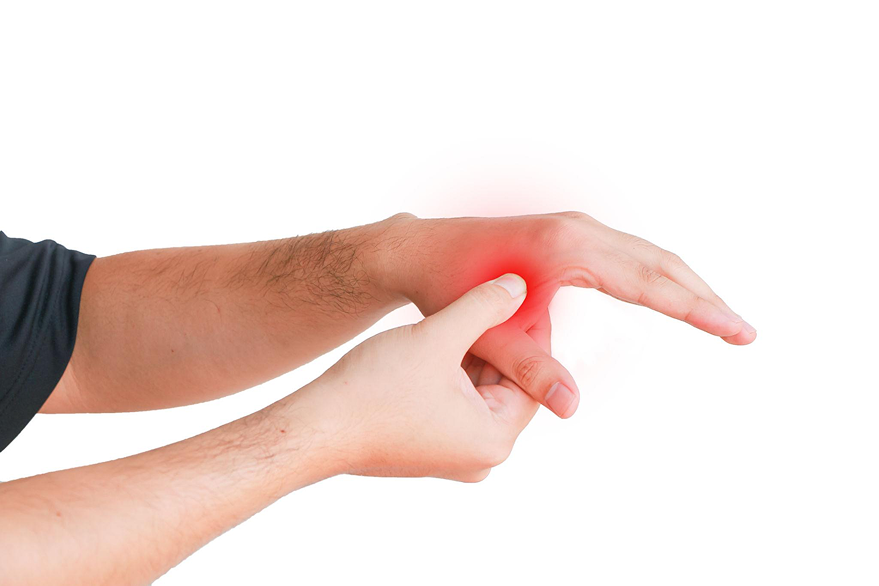
What is Basal Thumb Arthritis?
Basal thumb arthritis develops when the protective cartilage at the base of your thumb gradually wears down. This cartilage normally allows smooth, pain-free movement. As it deteriorates, the bones begin to rub against each other, leading to pain, stiffness, and reduced function.
This type of osteoarthritis affects the carpometacarpal (CMC) joint, located at the fleshy base of your thumb near the wrist. This joint is shaped like a saddle, letting your thumb move in many directions so you can grip, pinch, and rotate it precisely.
What causes Basal Thumb Arthritis?
This condition doesn’t have a single cause. Instead, it develops from a mix of factors:
- Age-related wear and tear on the cartilage
- Joint instability, where the thumb base becomes loose over time
- Repetitive strain from activities requiring pinching or gripping
- Previous injuries like fractures or ligament damage
- Genetic predisposition, especially in women
As the supporting ligaments weaken, the joint can partially slip out of position. This is called “subluxation.” In simple terms, it means the joint is no longer perfectly aligned, which increases friction and accelerates damage.
What are the symptoms of Basal Thumb Arthritis beyond just pain?
Besides the first dull ache at the base of your thumb, basal joint arthritis can cause several other physical and functional changes.
If you notice any of these symptoms, you should see a specialist like Dr. Ehab:
- A deep, aching pain at the thumb’s base, especially during gripping
- A grinding or crunching sensation (crepitus) when moving the thumb
- Loss of pinch and grip strength, making everyday tasks more difficult
- Weakness when opening jars, turning keys, or pinching objects
- Visible squaring of the thumb base, where the joint appears enlarged or misshapen
- Reduced range of motion and stiffness
- Development of a “swan-neck deformity”, where the thumb compensates by bending abnormally at other joints
These changes can significantly affect everyday independence if not treated early.
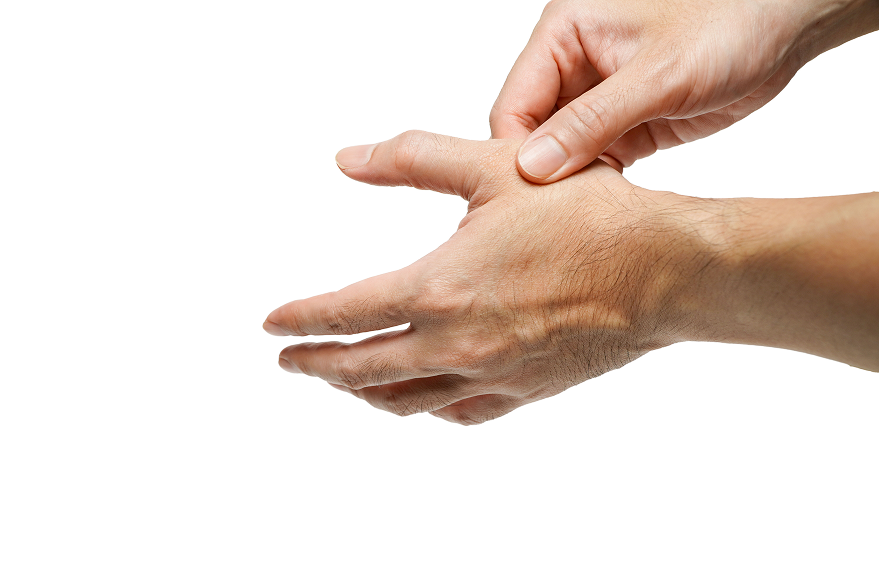
Advanced diagnosis: How is Basal Thumb Arthritis diagnosed?
Diagnosing basal thumb arthritis begins with a focused clinical assessment by a hand specialist such as Dr. Ehab Aldlyami. The goal is not just to confirm arthritis, but to understand its stage, stability, and impact on function.
During the clinical exam, Dr. Ehab will check where you feel pain, how your thumb moves, and your grip strength. One important test is the CMC grind test, which gently presses and rotates the joint to see if it causes pain or a grinding feeling (crepitus). He will also check if the joint is slipping out of place, which is called subluxation.
For imaging, X-rays are usually the first choice. They can show joint narrowing, bone spurs, and alignment changes. In some cases, MRI or ultrasound may be used to detect ligament problems or early cartilage damage not visible on X-rays.
Basal Thumb Arthritis treatment in Dubai: Exploring your options
Ehab Aldlyami provides personalized treatment for basal thumb arthritis based on its severity. The goal is not only to ease symptoms, but also to help you grip, pinch, and do daily tasks comfortably again.
Non-surgical approaches
Dr. Ehab usually starts with non-surgical treatments whenever possible to help reduce symptoms and improve your quality of life:
- Bracing and splinting: Customized braces or splints can support the thumb joint and helps reduce strain.
- Medications: Anti-inflammatory medications or pain relievers may be prescribed to manage discomfort.
- Activity Modification: Changing how you do certain tasks can reduce strain on your thumb joint.
- Physical therapy: Certain exercises can help your joint move better and get stronger, which can lessen the effects of arthritis.
- Injections: Corticosteroid injections deliver anti-inflammatory medication directly to the joint, providing targeted relief.
Basal thumb arthritis surgery
If non-surgical treatments stop working, surgery might be the best choice. The aim is not only to relieve pain, but also to keep your thumb moving well and strong.
- Joint Reconstruction: This procedure removes damaged joint surfaces to relieve painful bone-on-bone contact. A nearby tendon is often used to rebuild and cushion the joint, helping improve movement and long-term stability.
- Ligament Reconstruction: This technique repairs or replaces weakened ligaments using a tendon graft, restoring proper alignment of the thumb and improving both strength and function.
- Joint Fusion (Arthrodesis): In selected cases, joint fusion may be advised to eliminate pain completely. By fusing the bones of the joint together, movement at that joint is stopped, preventing painful friction.
Why choose Dr. Ehab Aldlyami for Basal Thumb Arthritis treatment in Dubai?
When basal thumb arthritis begins to affect your ability to pinch, grip, or perform simple daily tasks, picking the right specialist can make a big difference in your long-term function and quality of life.
Dr. Ehab Aldlyami has advanced experience in hand and wrist surgery. He focuses on techniques that keep your thumb moving and uses minimally invasive care tailored to each patient.
Here’s why patients trust his approach:
- Specialist hand and wrist expertise: Focused exclusively on hand and wrist conditions, ensuring precise treatment of the CMC (basal) joint.
- Accurate diagnosis: Combines detailed assessment with advanced imaging to evaluate the stage of arthritis.
- Personalized treatment: Offers tailored care ranging from non-surgical therapies to advanced surgery.
- Motion-preserving focus: Prioritizes techniques that relieve pain while maintaining thumb movement and strength.
- Patient-centered care: Clear communication, realistic expectations, and ongoing support throughout every stage of treatment.
With careful attention and a patient-first approach, Dr. Ehab Aldlyami offers expert treatment for basal thumb arthritis in Dubai. He helps patients regain comfort, strength, and confidence in their daily lives.
Book a consultation today to explore the most suitable treatment for your condition.
FAQs
The CMC joint is called a “saddle joint” because the bones fit together like a rider on a saddle. This unique shape allows your thumb to move in multiple directions and touch your other fingers (opposition), but this high mobility also makes it more susceptible to instability and arthritis.
No. While age increases the risk, basal joint arthritis can also develop due to genetics, repetitive thumb use, ligament looseness, or past injuries. Even younger, active people may develop symptoms from repeated stress on the thumb joint.
While possible, it is rarely recommended to have surgery on both thumbs simultaneously. Since you will need at least one functional hand for basic hygiene and daily tasks during the initial 4-week recovery phase, Dr. Ehab usually advises staging the procedures several months apart.
Without treatment, grip strength often declines over time due to pain and joint instability. The goal of both conservative care and surgery is to restore strength, not reduce it. After appropriate treatment and rehabilitation, many patients regain functional grip and pinch strength, allowing them to return to daily activities comfortably.
If ignored, the joint can continue to subluxate (slip out of place), leading to a permanent “squaring” of the hand. Over time, the surrounding joints may overcompensate, potentially leading to a swan-neck deformity where the thumb knuckle bends backward, making it even harder to grasp large objects.