


TFCC Tear
When most people feel pain on the little finger side of the wrist, they often assume it is a simple sprain that will settle with rest. The reality is different.
A TFCC tear affects the complex cartilage structure that stabilizes your wrist and supports smooth movement between the forearm and hand. This small but important structure can significantly affect how your wrist functions, making it painful to grip, twist, lift, or even perform simple daily activities. Without proper care, it can lead to long-term instability and reduced function.
Dr. Ehab Aldlyami, a UK-trained Consultant Hand & Wrist Surgeon and Vice President of the Emirates Hand Surgery Society, provides expert TFCC tear treatment in Dubai. His approach combines precise diagnosis with minimally invasive treatment to restore wrist stability, improve function, and support a smooth recovery tailored to each patient.
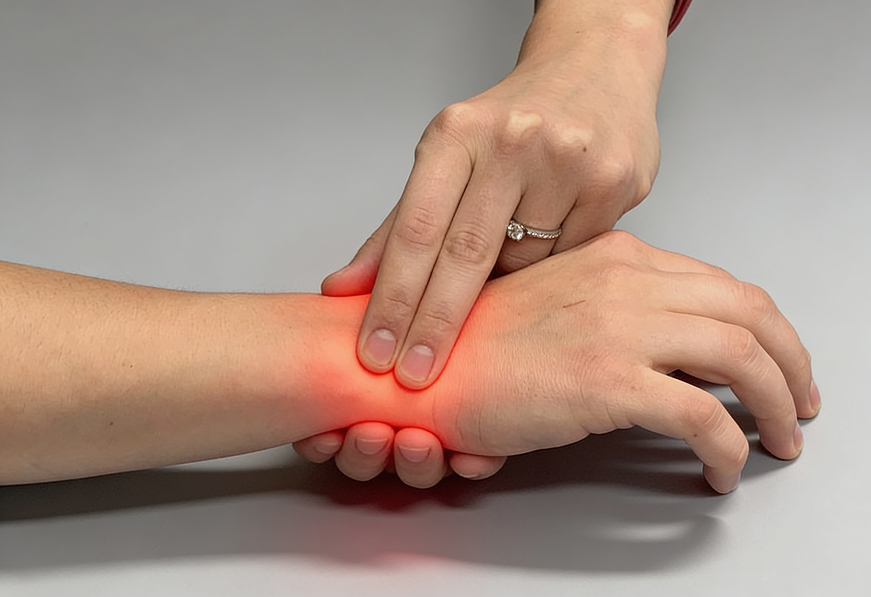
What is a TFCC tear?
The Triangular Fibrocartilage Complex (TFCC) is a small but vital structure located on the ulnar (little-finger) side of your wrist.
The TFCC cushions the joint between your wrist bones and the two forearm bones (the radius and ulna). It also keeps the wrist stable when you rotate your forearm, like when turning a doorknob or pouring water.
When this structure becomes torn, either through injury or gradual wear, pain is usually felt along the outer edge of the wrist. It may feel sharp during movement or more like a dull ache at rest.
If the problem continues without treatment, it can result in reduced grip strength, instability, and ongoing joint issues.
Recognizing the injury: Symptoms of a TFCC tear
TFCC tears present differently depending on their severity, but common symptoms include:
- Pain on the little-finger side of the wrist, often worsening with gripping or twisting.
- A clicking, popping, or grinding sensation while moving the wrist.
- Swelling or tenderness around the wrist joint.
- Weakness in grip strength.
- Instability or a feeling that the wrist will “give way”.
- Pain that worsens when leaning on the wrist or bearing weight through the arm.
These issues can interfere with daily life, whether you’re carrying shopping bags, typing, or participating in sports. If these signs sound familiar, it’s worth seeking a proper assessment.
Why it happens: Common causes of TFCC tear
TFCC tears can result from various factors, including:
- Sudden trauma to the wrist, such as falling on an outstretched hand
- Repetitive wrist motions, common in certain sports and professions
- A sudden twisting or jerking force applied to the wrist
- Degenerative changes over time
- Age-related wear of the cartilage
- Repetitive loading of the wrist in manual workers or athletes
Understanding the cause helps guide the most appropriate TFCC injury treatment in Dubai.
Advanced diagnosis: How is a TFCC tear diagnosed?
Accurate diagnosis is the first step in effective TFCC tear treatment in Dubai. Dr. Ehab Aldlyami uses a combination of detailed clinical assessment and advanced imaging to identify the exact nature of the injury.
- A detailed physical examination to check for pain, movement limits, and stability.
- Specific wrist tests designed to reproduce symptoms.
- MRI scans to clearly identify the location and severity of the tear.
- X-rays to assess bone structure and rule out other issues.
A precise diagnosis is not just about confirming a TFCC tear, it is about understanding the extent of the injury and its impact on wrist stability before creating a personalized treatment plan.
Your treatment options: TFCC tear treatment in Dubai
Not all TFCC tears require surgery. Treatment is tailored to the type of tear, its severity, and your personal goals and lifestyle. Dr. Ehab takes a stepwise, evidence-based approach.
Non-surgical treatment
- Wrist immobilization using a splint or cast (typically 4-6 weeks).
- Anti-inflammatory medication for pain and swelling.
- Targeted hand therapy to improve movement, strength, and stability.
- Corticosteroid injection into the wrist joint for symptomatic relief.
TFCC tear surgery
When non-surgical measures fail, or when a complete or unstable tear is identified, TFCC tear surgery is recommended.
- Arthroscopic TFCC Repair: For more significant tears, arthroscopic surgery may be advised. This minimally invasive technique uses a small camera and fine instruments to repair the damaged TFCC, typically resulting in less scarring and a quicker, more comfortable recovery.
- Open TFCC Surgery: For more complex cases, open surgery may be needed to reach and repair the damaged tissue. Dr. Ehab uses advanced techniques to ensure the repair is accurate and delivers the best possible result.
Why choose Dr. Ehab Aldlyami for TFCC tear treatment in Dubai?
When wrist pain begins to affect your ability to work, exercise, or carry out daily tasks, choosing the right specialist can make a real difference in your recovery.
Dr. Ehab Aldlyami, Consultant Hand & Wrist Surgeon and Vice President of the Emirates Hand Surgery Society, specializes in hand and wrist conditions, with treatment aimed at restoring movement, strength, and long-term function.
Here’s why patients trust his approach:
- Dedicated specialization in hand and wrist surgery
- Treatment plans tailored to individual needs and activity levels
- Experience with minimally invasive surgical techniques
- Emphasis on structured rehabilitation and recovery
- Clear communication and ongoing patient support
With a precise and compassionate approach, Dr. Ehab Aldlyami provides expert TFCC injury treatment in Dubai, helping patients return to daily activities with improved strength, stability, and confidence.
FAQs
Discomfort is expected in the early post-operative period and is managed with appropriate pain relief. Most patients find that pain levels reduce significantly within the first two weeks. Dr. Ehab’s team will provide clear guidance on pain management before you leave.
An untreated TFCC tear may lead to persistent pain, reduced strength, and increasing instability in the wrist. Over time, this can contribute to joint degeneration.
Yes. Many athletes successfully return to sport following TFCC repair, including those competing in racquet sports, gymnastics, and combat sports. Return-to-sport timelines vary depending on the nature of the sport and the complexity of the repair, and are determined on an individual basis through regular follow-up.
Yes, in many cases, conservative management including splinting, anti-inflammatory treatment, and hand therapy can lead to satisfactory healing. However, complete tears, tears causing joint instability, or those that fail to respond to non-surgical care will generally require surgery.
A wrist sprain means the ligaments around the wrist are stretched or torn. A TFCC tear affects a specific cartilage structure on the little finger side of the wrist. The symptoms can feel similar, like pain and weakness, so that’s why a specialist assessment is important for an accurate diagnosis and treatment.