


Distal
Radius Fracture
Your wrist is one of the most complex and relied-upon joints in the body. When you break it, whether from a fall, a sporting injury, or a road accident, the shock is immediate, and so is the worry: Will my hand ever feel the same again?
In most cases, the answer is yes. But your recovery depends greatly on the quality of care you receive. Wrist fractures are not just simple breaks. The wrist is made up of eight small bones, along with the two forearm bones, plus important tendons, nerves, and blood vessels. That’s why proper distal radius fracture treatment in Dubai needs careful evaluation and expertise.
Getting the diagnosis right, choosing the right treatment, and guiding recovery all require the skilled judgment of a hand and wrist specialist, not a general orthopedic approach.
Dr. Ehab Aldlyami, a consultant hand and wrist surgeon in Dubai, brings expertise in hand surgery and wrist trauma to every patient he sees. Whether your fracture can be managed in a cast or requires surgical stabilization, his goal is always the same: restore your wrist to its full, pain-free potential.
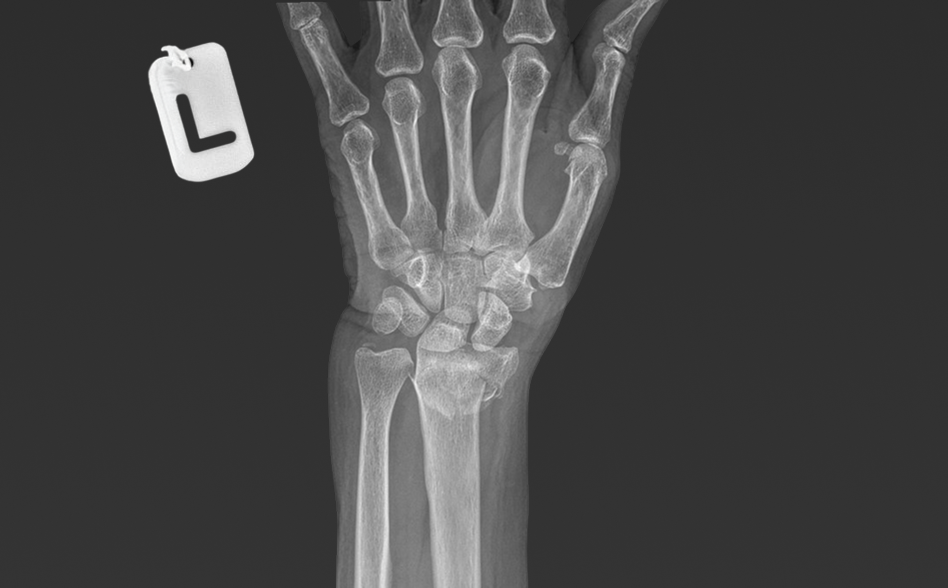
What is a Distal Radius Fracture?
A distal radius fracture is a break at the end of the forearm bone (the radius) closest to the wrist. It is one of the most common types of wrist fractures often occurs after a fall onto an outstretched hand.
Understanding the Distal Radius
The forearm has two bones: the radius (on the thumb side) and the ulna (on the little finger side). The distal radius is the part of the radius closest to the wrist joint.
This area plays a key role in:
- Wrist movement (bending and rotation)
- Grip strength
- Stability of the hand and wrist
Distal Radius Fracture Classification & Types
Wrist fractures are classified based on the direction the bone shifts and whether the break enters the joint surface. Dr. Ehab Aldlyami uses these classifications to determine if a patient needs a simple cast or a more stable surgical fix.
Distal radius fracture types include:
Type of fracture | Description | Common cause |
Colles’ Fracture | The broken end of the radius tilts upward. | Fall on an outstretched hand |
Smith’s Fracture | The broken end of the radius tilts toward the palm. | Fall onto a bent wrist |
Barton’s Fracture | A fracture that involves the wrist joint surface itself. | High-impact trauma or sports injuries |
Intra-articular | The break extends into the joint (higher complexity). | High-energy accidents |
Recognizing the injury: Symptoms of a wrist fracture
A distal radius fracture usually causes immediate, severe wrist pain with visible deformity, but not always. Some fractures, particularly in older adults with osteoporosis, may present with only moderate pain and mild swelling, making specialist assessment and imaging essential.
Common symptoms of a distal radius fracture:
- Sudden, sharp wrist pain often immediate at the time of injury
- The wrist may appear bent, angled, or misshapen
- Rapid swelling and bruising around the wrist and hand
- Tenderness to touch directly over the end of the forearm
- Difficulty or inability to grip, lift, or rotate the wrist
- Numbness or tingling in the thumb, index, or middle finger
- Skin may look stretched or change color in more serious injuries
- Ongoing dull pain in milder cases, sometimes mistaken for a sprain
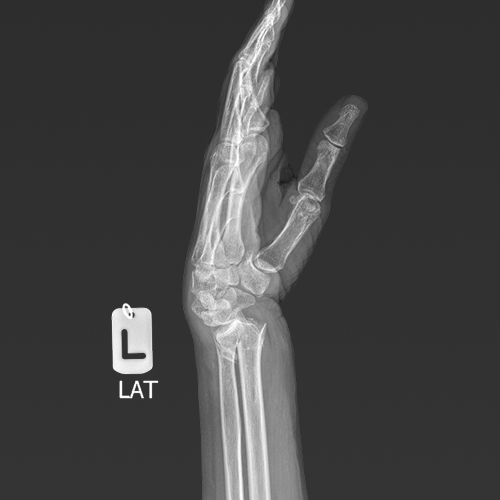
Why it happens: Common causes of Distal Radius Fracture
The vast majority of distal radius fractures result from a fall on an outstretched hand, a reflex we cannot suppress. However, underlying bone density, activity level, and age all determine whether the same impact breaks a bone or not.
Common causes of distal radius fractures:
- Falling onto an outstretched hand (the most common cause)
- Sports injuries, especially during contact or high-impact activities
- Car or motorcycle accidents
- Fragile bones due to osteoporosis, making fractures more likely even after minor falls
Diagnosis of Distal Radius Fracture by Dr. Ehab Aldlyami
Accurate diagnosis is the first step towards effective treatment. Detailed imaging helps determine the exact fracture pattern and the best plan for recovery.
Dr. Ehab Aldlyami performs a careful clinical assessment and uses advanced imaging tools such as X-rays and CT scans to clearly understand your injury. This allows him to determine:
- The exact type of fracture (for example, displaced, complex, or involving the joint)
- Whether surgery is needed or if the fracture can heal with a cast
- The most effective wrist fracture treatment plan for proper healing and long-term wrist function
This thorough approach ensures that nothing is missed and that your treatment is tailored specifically to your injury.
Your treatment options: Distal Radius Fracture treatment in Dubai
Treatment is chosen based on the fracture type, your age, and your activity level. While many fractures heal in a cast, unstable breaks require surgical stabilization to ensure the wrist functions perfectly once it heals.
Non-surgical wrist fracture treatment: Casting
If the bone is well aligned, a cast can safely support healing without surgery. Regular follow-ups ensure the bone stays in the correct position.
If your fracture is stable and the bones are in a good position, Dr. Ehab may treat it with a lightweight cast or splint. This keeps the wrist still, allowing the bone to heal naturally.
During this time:
- You will have regular check-ups and X-rays
- The position of the bone is closely monitored
- Adjustments can be made if needed to maintain proper alignment
This approach is commonly used for simpler wrist fractures and can lead to excellent results when carefully supervised.
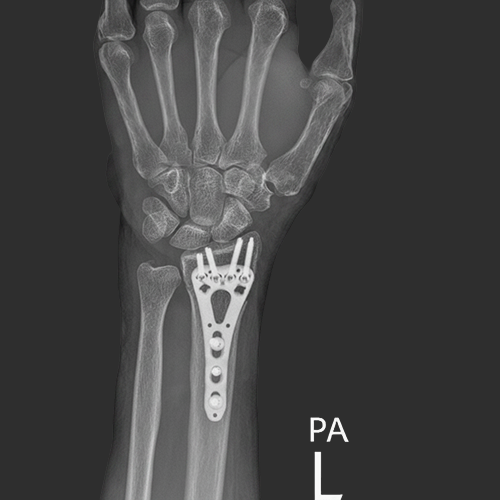
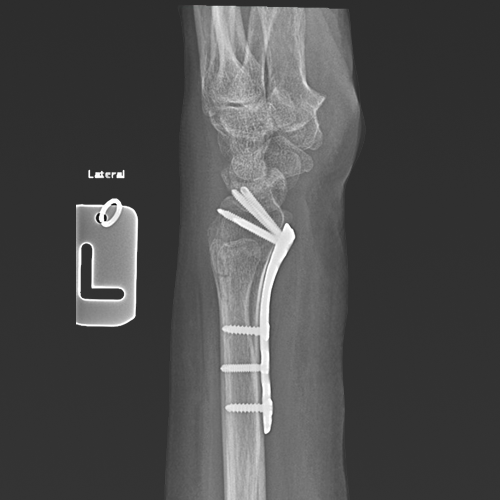
Surgical options for complex wrist fractures
- Open Reduction and Internal Fixation (ORIF): This is the gold standard for restoring anatomy. Using a high-grade titanium plate and screws, Dr. Ehab realigns the bone fragments with sub-millimeter precision.
- Minimally invasive techniques: Whenever possible, Dr. Ehab uses smaller incisions. This reduces post-operative swelling and allows the patient to begin hand therapy faster, which is critical for preventing stiffness.
- Arthroscopic-assisted repair: In complex cases involving the joint surface, Dr. Ehab uses a tiny camera (arthroscope) to look inside the joint. This allows him to “fine-tune” the alignment of the cartilage, significantly reducing the risk of post-traumatic arthritis.
- External fixation or pinning: For highly complex or shattered fractures where a plate may not be suitable, temporary external frames or specialized pins are used to maintain length and alignment while the bone begins its healing journey.
Recovery and hand therapy after a wrist fracture
Recovery starts as soon as treatment begins, with gentle movement to prevent stiffness. Hand therapy plays a key role in helping you regain strength and flexibility.
Recovery doesn’t wait until the cast comes off, it begins right away. To avoid stiffness, especially after being in a cast, early and controlled movement is important.
Dr. Ehab advocates for early finger wiggling and specific exercises to keep your tendons gliding smoothly. Most patients return to light activities within 6 to 8 weeks, while full strength for sports may take several months.
Why choose Dr. Ehab Aldlyami for Distal Radius Fracture treatment in Dubai?
When a wrist fracture affects your ability to work, move, or care for yourself, choosing the right specialist can make a significant difference in your recovery. Dr. Ehab Aldlyami, Consultant Hand and Wrist Surgeon, brings advanced expertise in hand surgery, wrist trauma, and microvascular reconstruction, focused on restoring both function and confidence.
Here’s why patients trust his approach:
- Specialist hand and wrist expertise: Focused exclusively on conditions affecting the hand and wrist, ensuring precise care for complex injuries like distal radius fractures.
- Accurate, detailed diagnosis: Uses thorough clinical evaluation and advanced imaging to identify the exact fracture pattern and joint involvement.
- Personalized treatment plans: Each treatment is tailored, whether non-surgical casting or surgical fixation, based on your specific injury and lifestyle needs.
- Early recovery focus: Encourages safe, guided movement and structured hand therapy to prevent stiffness and restore strength.
- Patient-centered care: Clear communication, realistic expectations, and support throughout every stage of recovery.
With a results-driven and compassionate approach, Dr. Ehab Aldlyami provides expert care for those seeking wrist fracture treatment, helping patients regain strength, mobility, and confidence in their daily lives.
Book a consultation today to start your recovery with specialist-led care.
FAQs
Usually, the bone takes about 6 to 8 weeks to knit back together, but it can take up to a year for your full strength and flexibility to return.
Not always. If the bone is stable and aligned, a cast works great. Surgery is only recommended if the bone is likely to heal crookedly or affect your joint movement.
Yes. Since the radius is the main bone supporting the wrist, a break at the end of it is what most people call a “broken wrist.”
It is generally not recommended to drive for safety reasons, as your reaction time and ability to grip the wheel are compromised.
The swelling from the break can press on the median nerve. This is something Dr. Ehab will check for immediately during your consultation.