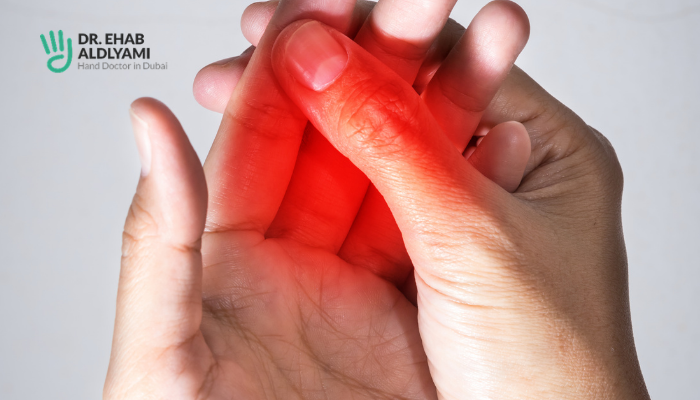


Can carpal tunnel come back after surgery?
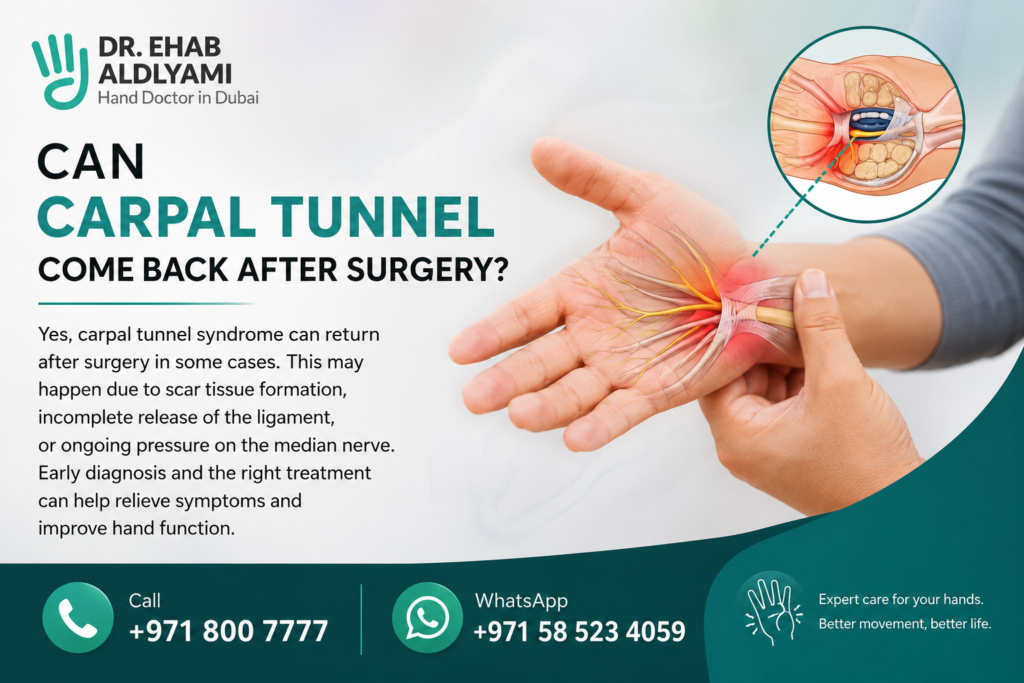
Numbness creeping back into your fingers weeks after surgery can feel unsettling, especially when you thought the problem was behind you. If you’ve caught yourself wondering, ” Can carpal tunnel come back after surgery?”, you’re asking one of the questions patients raise most often at follow-up.
Dr. Ehab Bassim Aldlyami, a UK-trained Consultant Orthopaedic Surgeon at King’s College Hospital London, Dubai, has spent more than 20+ years with an exclusive focus on hand and wrist care, guiding patients across the UAE through recovery from carpal tunnel syndrome.
His answer is refreshingly direct: symptoms can occasionally return, but that doesn’t always mean the surgery failed. Here’s what’s really behind it, and how the right carpal tunnel syndrome treatment can get your hands back to full strength.
Can Carpal Tunnel Come Back After Surgery?
It’s possible, but uncommon. Research indicates recurrence after carpal tunnel release ranges from 3% to 19%, suggesting most patients enjoy lasting relief. When symptoms do return, it’s rarely a sign that something went badly wrong, more often, it points to one of a few identifiable causes. |
Does Carpal Tunnel Surgery permanently fix the problem?
For many patients, carpal tunnel syndrome treatment surgery provides lasting relief from symptoms. The procedure works by releasing the transverse carpal ligament, which reduces pressure on the median nerve as it passes through the wrist.
Once the nerve has more space, symptoms such as:
- Numbness in the fingers
- Tingling or “pins and needles”
- Nighttime hand pain
- Hand weakness
- Difficulty gripping objects
Often begin to improve.
However, it’s important to understand that surgery relieves nerve compression; it does not instantly heal a nerve that has been compressed for months or years. Nerves recover gradually, which means some symptoms may continue to improve over several months.
Can Carpal Tunnel come back after surgery? Three reasons symptoms return
The short answer is yes, but not always in the way people think.
When patients ask, “Can carpal tunnel come back after surgery?”, they’re usually referring to any symptoms that appear after their procedure. In reality, doctors generally classify these situations into three categories.
1. Persistent symptoms
Sometimes symptoms never completely go away after surgery.
This doesn’t necessarily mean the operation wasn’t successful. If the median nerve was severely compressed before surgery, it may require a longer healing period. In some cases, permanent nerve damage may have already occurred before treatment.
2. Recurrent carpal tunnel syndrome
This refers to symptoms that:
- Improved after surgery
- Stayed away for months or years
- Returned later
Although true recurrence is uncommon, it can happen and should be evaluated by a hand specialist.
3. A different hand or nerve condition
Not every case of returning numbness is caused by recurrent carpal tunnel syndrome.
Other conditions may produce similar symptoms, including:
- Arthritis affecting the wrist
- Tendon inflammation
- Ulnar nerve compression
- Nerve compression in the neck (cervical radiculopathy)
- Trigger finger or other hand disorders
A detailed examination identifies the actual cause before deciding on further treatment.
Why can Carpal Tunnel return after surgery?
Carpal tunnel symptoms may return or continue after surgery for several reasons, including:
- Scar tissue: During healing, scar tissue may form around the median nerve and irritate it.
- Medical conditions: Diabetes, thyroid disorders, rheumatoid arthritis and others that involve nerves can cause persistent symptoms.
- Repetitive wrist movements: Continued typing, gripping or vibrating tools can continue to put stress on the wrist.
- Incomplete release: In rare cases, the ligament may not have been fully released during the original procedure.
- New wrist problems: A new injury or age-related changes in the wrist can cause symptoms similar to carpal tunnel syndrome.
How common is recurrence? Carpal tunnel syndrome affects up to 5% of adults, making it one of the most common nerve conditions affecting the hand. The good news is that recurrence after surgery is relatively uncommon. Most patients experience lasting relief, and when symptoms do return, it is often many years after the initial procedure. |
Carpal Tunnel surgery recovery time: What should you expect?
Understanding your carpal tunnel surgery recovery time helps set realistic expectations and reduces unnecessary worry during the healing process.
While everyone’s recovery is different, here’s a general timeline:
Recovery Stage | What You Can Expect |
First few days | Mild pain, swelling, and stiffness are normal. |
2–6 weeks | Everyday activities become easier, and discomfort gradually improves. |
2–3 months | Grip strength and hand function continue to recover. |
Up to 6–12 months | The median nerve may continue healing, particularly if compression was severe before surgery. |
Remember: Recovery is gradual. Temporary soreness or occasional tingling during healing doesn’t necessarily mean the surgery has failed.
Warning signs worth getting checked
- Numbness or tingling returning after a period of feeling normal
- Weakening grip or dropping objects more than usual
- Night-time symptoms waking you from sleep again
- New or different pain patterns from your original symptoms
- Swelling near the surgical site that isn’t improving
How Dr. Ehab approaches Carpal Tunnel Syndrome Treatment Surgery
When a patient is concerned about returning symptoms, Dr. Ehab starts with a thorough, individualized diagnosis rather than assuming the causes:
- A detailed clinical exam of the hand, wrist, and grip strength
- Nerve conduction studies to distinguish true recurrence from a new, unrelated issue
- A review of surgical history, including whether the original procedure was open or endoscopic
Because his practice is dedicated exclusively to hand and wrist conditions, Dr. Ehab offers both open and endoscopic techniques depending on what suits each case, helping minimize recurrence risk from the outset.
Can returning symptoms be treated without another surgery?
Many patients worry that recurring symptoms automatically mean another operation.
Fortunately, that isn’t always the case.
Depending on the underlying cause, treatment may include:
- Wrist splinting
- Hand therapy
- Activity modification
- Ergonomic adjustments
- Anti-inflammatory medication
- Corticosteroid injections
When these steps fall short, and the cause traces back to scar tissue or an incomplete release, revision surgery may be recommended. Dr. Ehab approaches these cases with extra care, since operating around existing scar tissue demands more precision than a first procedure.
Why choose Dr. Ehab Bassim Aldlyami for Carpal Tunnel Syndrome Treatment?
Dedicated hand and wrist specialist: Dr. Ehab focuses exclusively on hand and wrist conditions, including carpal tunnel syndrome. | Advanced fellowship training: He completed a Hand Fellowship at the renowned Pulvertaft Hand Centre in the UK and holds the FRCS in Trauma and Orthopaedics. |
Comprehensive diagnosis: Every patient undergoes a thorough assessment using clinical examination, nerve conduction studies, and imaging when needed. | Conservative treatment first: Non-surgical options are recommended whenever appropriate, with surgery considered only when necessary. |
How to reduce the risk of recurrence of Carpal Tunnel Symptoms
While recurrence cannot always be prevented, a few simple habits can help protect your wrist after surgery:
- Follow your surgeon’s postoperative instructions.
- Complete recommended hand therapy or exercises.
- Avoid repetitive wrist strain, especially during recovery.
- Use good ergonomics and take regular breaks when typing or performing repetitive tasks.
- Keep chronic conditions such as diabetes well controlled.
- Seek medical advice if symptoms return.
These measures can support healing and help maintain long-term hand function.
Your hand deserves a specialist - Consult Dr. Ehab Bassim Aldlyami
For most patients, carpal tunnel syndrome treatment surgery provides lasting relief and significantly improves quality of life. While the answer to “Can carpal tunnel come back after surgery?” is yes, true recurrence is relatively uncommon.
More often, persistent or returning symptoms may be related to slow nerve healing, scar tissue, or another condition affecting the hand or upper limb.
Concerned about persistent or recurring symptoms after carpal tunnel surgery? Book a consultation with Dr. Ehab Bassim Aldlyami for expert evaluation.
FAQs
Most patients notice an improvement in numbness and tingling within the first few weeks after surgery. Recovery of grip strength usually takes between 6 weeks and 3 months, although it may take up to a year in cases of severe, long-standing nerve compression.
Yes. Recurrence is rare and typically occurs after 10 years or more, and is caused by scar tissue or by continuing to use the affected limb again, not by the surgery itself.
Carpal tunnel release is considered one of the more reliably effective procedures in hand surgery, with the large majority of patients experiencing lasting relief.
Some soreness and tenderness around the incision is normal for the first few weeks, generally well managed with rest, icing, and any medication your surgeon recommends.
When numbness, tingling or weakness begins to affect sleep or daily activities or recurred after previous treatment, it’s worth an evaluation before it gets worse.