

What is Gamer's Thumb? Symptoms, Causes, and Treatment
Does your thumb ache after a long gaming session or a day of nonstop texting?
You might be dealing with gamer’s/texter’s thumb, a condition that is becoming more common as smartphones, tablets, and controllers take up more of our daily lives. If the pain has been nagging at you for weeks, you are probably wondering what is causing it and what you can do about it.
This blog walks you through what gamer’s thumb is, why it happens, how to spot it early, and the treatment options that can help you get back to using your hands without pain.
Key takeaways: Gamer’s/Texter’s Thumb
|
What is Gamer's/Texter’s Thumb?
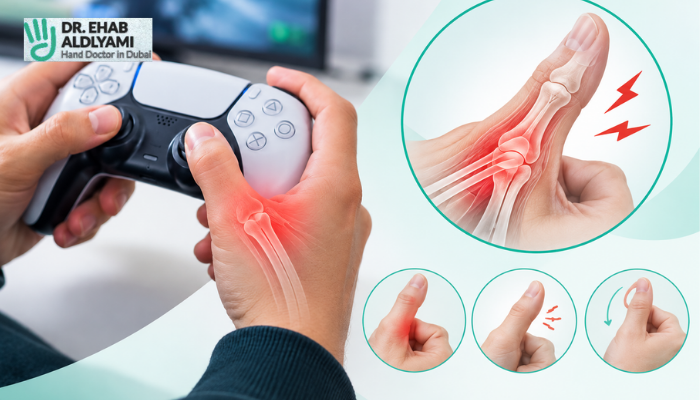
Gamer’s thumb is a common term for pain and irritation around the thumb and wrist caused by repeated thumb movements.
Medically known as De Quervain’s tenosynovitis, this condition affects two tendons on the thumb side of the wrist. These tendons help you move your thumb and pass through a narrow area near the wrist.
When you repeat the same thumb or wrist motion over and over, such as pressing buttons on a gaming controller, texting, scrolling, or holding a phone, it can irritate the tendons and cause swelling. This can make simple movements like gripping, pinching, or moving your thumb uncomfortable.
What are Gamer's Thumb symptoms?
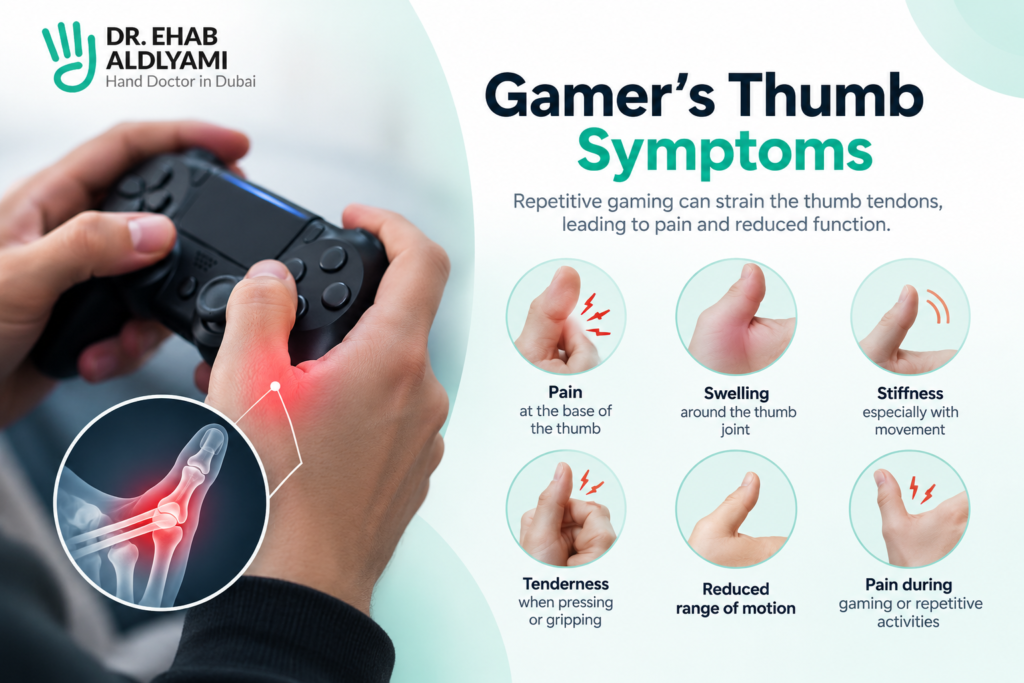
The symptoms of this condition often develop gradually, though they can build up quickly after a stretch of heavy device use. Common signs to monitor include:
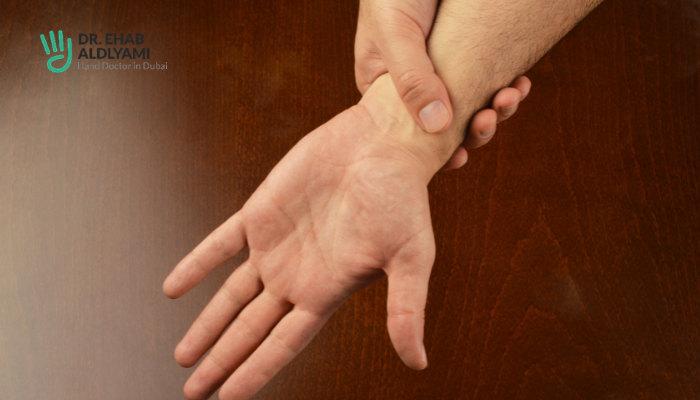
- Pain along the thumb side of your wrist, where your thumb meets your hand
- Swelling or a small bump near the base of the thumb
- A catching or snapping feeling when you move your thumb
- Pain that gets worse when you grip, pinch, or make a fist
- Pain that may extend from the wrist towards the thumb or forearm
- Reduced comfort or strength when holding a controller, phone or other object
Symptoms often start mild and build up gradually. Many people notice the pain only during activity at first, then find it lingers even at rest as the irritation continues.
What causes Gamer's Thumb?
Understanding gamer’s thumb causes helps you figure out which habits might be putting strain on your hand. The condition usually develops from:
- Long gaming sessions using thumb-heavy controllers or joysticks
- Frequent texting, scrolling, or swiping on a phone or tablet
- Repetitive typing on small on-screen keyboards
- Awkward wrist positions held for long periods
- Activities that combine gripping with side-to-side thumb motion, such as knitting or certain sports
Anyone who repeats the same thumb movement for hours at a time is at risk, regardless of age. It is not limited to teenagers or serious gamers.
How is Gamer’s Thumb diagnosed?
A hand specialist can usually diagnose gamer’s thumb without complex testing.
Your doctor will start by asking about your symptoms, daily activities, gaming or device use and any previous injuries. They will examine your thumb and wrist to identify the location of tenderness and assess movement.
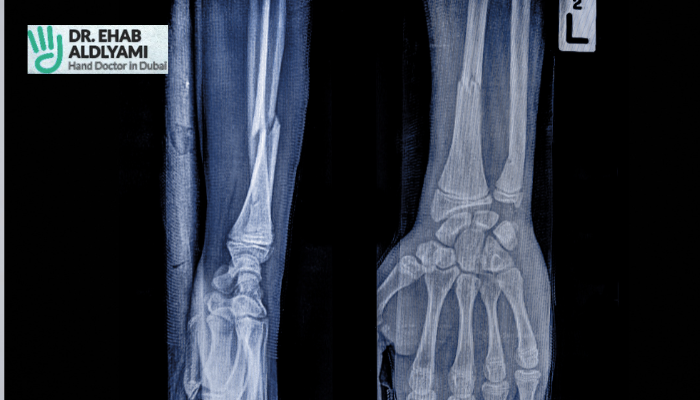
A physical examination may include specific maneuvers, such as the Finkelstein or Eichhoff test, which can help identify De Quervain’s tenosynovitis. Imaging is not always required, but an X-ray or ultrasound may be considered when the diagnosis is uncertain or another condition needs to be ruled out.
Treatment for Gamer's Thumb
Effective treatment for gamer’s thumb usually starts with the simplest options and moves up only if needed:
- Rest and activity changes: Reducing activities that trigger your pain can give the irritated tendons time to settle. Shorter gaming sessions and regular breaks may also help.
- Splinting: A thumb-and-wrist splint can limit painful movement and reduce stress on the affected tendons while they recover.
- Ice therapy: Applying a wrapped ice pack to the painful area for 15–20 minutes at a time may help ease pain and swelling.
- Over-the-counter pain relief: Medicines such as anti-inflammatory pain relievers may help reduce pain and inflammation when they are appropriate for you. Check with your doctor or pharmacist if you are unsure.
- Hand therapy: Once the initial pain has settled, a hand therapist can guide you through gentle stretches and strengthening exercises to improve movement and function.
- Steroid injections: If symptoms continue despite other treatments, a hand specialist may recommend a corticosteroid injection around the affected tendon sheath to help reduce pain and inflammation.
- Surgery: Surgery may be considered when symptoms do not improve with non-surgical treatment. The procedure releases the tight tissue around the tendon, giving it more room to move and reducing friction.
A hand specialist can help you figure out which stage of treatment fits your symptoms, since going straight to advanced options is rarely necessary.
Effective Texting Thumb exercises to try
Once acute pain has calmed down, gentle texting thumb exercises can support recovery and help prevent flare-ups:
- Thumb lifts: Place your hand flat on a table with your palm facing up. Slowly lift your thumb away from your palm, hold for 6 seconds, and lower it. Repeat 8 to 10 times.
- Opposition stretch: Bring your thumb across your palm and touch its tip to your little finger. Hold for about 5 seconds, then relax. Repeat gently.
- Resisted extension: Place a light rubber band around your fingers and thumb. Open your thumb outward against the band’s resistance, then return slowly. Complete 10 to 12 repetitions.
Always check with a hand specialist or physical therapist before starting exercises, since doing them too early or too aggressively can slow your recovery.
Why choose Dr. Ehab Aldyami for Gamer’s Thumb and hand care in Dubai?
If persistent thumb pain is affecting your gaming, work or daily activities, an accurate diagnosis can help you understand what is causing it and which treatment options are appropriate.
Dr. Ehab Bassim Aldlyami is a UK-trained hand specialist in Dubai with more than two decades of experience in hand and wrist conditions. He completed a clinical Hand Fellowship at the Pulvertaft Hand Centre in the UK and holds Fellowship of the Royal College of Surgeons (UK) in Trauma and Orthopaedics. His approach to Gamer’s Thumb and related tendon conditions focuses on:
- Specialist hand and wrist expertise: His practice covers De Quervain’s syndrome and other tendon disorders affecting the hand and wrist.
- Careful diagnosis: Treatment begins with assessing your symptoms and identifying the underlying cause of your thumb pain.
- Non-surgical options first: Where appropriate, treatment may include rest, splinting, medication, activity modification, and hand therapy.
- Treatment based on your needs: Your treatment plan can take into account your symptoms, daily activities, and how the condition affects your hand function.
- Clear communication: Understanding your diagnosis and treatment options can help you make informed decisions about your care.
Take the next step for persistent thumb pain.
Gamer’s Thumb can make activities that rely on repeated thumb movement uncomfortable, whether you spend hours gaming, working at a computer, or using your hands throughout the day.
If your symptoms are not settling, an assessment can help identify the cause and determine whether conservative treatment may be appropriate. Book your appointment today.
FAQs
Gamer’s thumb usually causes pain on the thumb side of the wrist. It can feel like an ache or a sharp pain, especially when you grip, pinch, or move your thumb. The area may also feel sore or swollen. Using your hand for long periods can make the pain worse, while resting it may help.
No. They affect different parts of the hand and wrist. Gamer’s thumb involves the tendons around the base of the thumb, while carpal tunnel syndrome happens when a nerve in the wrist becomes compressed. Carpal tunnel often causes numbness, tingling, or weakness in the hand. Because the symptoms can overlap, a hand specialist can help identify the cause.
The pain is located on the thumb side of your wrist, near the base of the thumb joint. You may feel an ache radiating up into your forearm or down into the thumb. Discomfort usually intensifies when pinching objects, making a fist, or moving your thumb.
Usually not. Many cases improve with rest, activity changes, and appropriate treatment. However, continuing to put strain on the thumb without addressing the problem can keep the tendons irritated and make the pain last longer. If symptoms do not settle, it is worth having your hand assessed.
You may need to cut back on activities that trigger the pain while your thumb heals. Taking regular breaks, changing how you hold your controller or phone, and avoiding movements that make the pain worse can help. A splint may also be recommended in some cases. A hand specialist can guide you on when and how to return to your usual activities.