



Does Dupuytren’s Contracture Get Worse Over Time

Does Dupuytren’s Contracture Get Worse Over Time

Dupuytren’s Contracture is a slowly progressing condition that affects the hand, the connective tissue just beneath the skin of the palm and fingers. Many patients notice changes in their hands and wonder if the condition will stay the same or get worse. Dr. Ehab Aldlyami, a specialist in hand and upper limb conditions, focuses on spotting the disease early, making an accurate diagnosis, and tailoring treatment to each patient’s needs. His goal is to help people keep as much hand function as possible and maintain their quality of life.
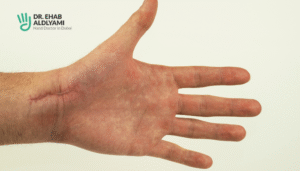
What is Dupuytren contracture ?

Dupuytren’s contracture affects the connective tissue under the skin of the palm and fingers. Over time, this tissue thickens and tightens, forming firm nodules in the palm that may develop into cord-like bands, pulling the fingers inward. As this happens, straightening the fingers becomes harder, and everyday hand movements can be affected. Typical signs include firm nodules in the palm, fingers that slowly become stiffer, and often a family history of the condition. Dupuytren’s contracture is harmless and not related to cancer.

Does Dupuytren’s contracture progress over time?

Dupuytren’s Contracture typically worsens over time, although the rate of progression varies. Early on, patients may notice small lumps or slightly thickened areas in the palm. There is usually no problem moving the fingers at this stage. As time passes, these areas can become tighter and form firm cords under the skin. Gradually, the affected fingers may start to bend inward and become harder to straighten. Dr. Aldlyami carefully follows each patient’s progress, knowing that the condition does not behave the same way for everyone. In some cases, changes happen gradually over many years. In others, especially in patients with diabetes or a strong family history, the disease can advance faster and begin to interfere with everyday hand function.

Signs of Dupuytren’s Contracture

Early recognition is essential. During clinical evaluation, Dr. Aldlyami looks for common signs of Dupuytren’s Contracture, including:

  • Small, firm nodules in the palm
  • Thickened or puckered skin
  • Cord-like bands beneath the skin
  • Tightness when attempting to straighten the fingers
  • Difficulty placing the hand flat on a surface

The ring and little fingers are most commonly affected, though progression can involve other fingers.

Symptoms and Causes

Symptoms of Late-Stage Dupuytren’s Contracture

The condition often progresses faster in men and in those with both hands affected. Small lumps in the palm can thicken into cord-like bands that feel like strings under the skin, causing it to tighten and look lumpy. This is similar to scar tissue forming during wound healing, but in Dupuytren’s contracture, it happens without any injury. The disease can develop slowly for years without causing issues. Symptoms usually appear when the tightening starts to limit finger movement, making it harder to straighten the fingers or use the hand.

Causes

The exact cause is still unclear, but genetics plays a major role in Dupuytren’s contracture. Certain factors increase the risk, including being male, over the age of 40, having diabetes, smoking, and alcohol use. The condition develops when the palmar fascia, the fibrous tissue that supports movement in the hand and fingers, thickens and shortens abnormally, gradually limiting normal motion.

Diagnosis of Dupuytren’s contracture

Diagnosis is mainly based on a clinical examination and rarely requires imaging. Dr. Aldlyami carefully examines the hand to check for nodules or cords, how much the fingers are bent, and any changes in the skin. Simple functional assessments, such as the tabletop test, are also used to gauge how advanced the condition is and whether it is progressing. Early diagnosis allows for structured monitoring and timely intervention when treatment becomes necessary.

Is it possible to manage the progression of Dupuytren’s contracture?

At present, there is no proven method to stop or slow the progression of Dupuytren’s contracture. Various treatments, including steroid injections, vitamin E supplementation, hand therapy, radiotherapy, massage, and splinting, have been studied. However, current research doesn’t show consistent evidence that these approaches prevent the disease from advancing.

Factors that may worsen Dupuytren’s contracture

The exact cause of Dupuytren’s contracture is still not fully understood. That said, certain factors are known to increase the risk or speed up how quickly the condition progresses. These include type 2 diabetes, smoking, regular alcohol use, and some anti-seizure medications.

Genetics also plays a major role. People with a family history of Dupuytren’s contracture are more likely to develop it, as are those of Scandinavian or Northern European background.

Treatment for Dupuytren contracture

Treatment for Dupuytren’s contracture depends on how severe it is and how much it affects hand function.

Observation and monitoring
In mild cases where the fingers aren’t yet bent, Dr. Aldlyami often recommends simply keeping an eye on the condition with regular check-ups to track any changes.

Non-surgical options
For some patients, minimally invasive treatments can help.Physical therapy or gentle stretching exercises to maintain finger flexibility. Using braces or splints to help keep the fingers stretched and preserve their normal range of motion. Collagenase injections or needle aponeurotomy can release the cords that pull the fingers, often restoring movement with a shorter recovery time.

Surgical treatment
If the contracture starts to interfere with daily tasks, surgery may be necessary. The goal is to remove or release the affected tissue to improve finger extension. Dr. Aldlyami reviews the risks, benefits, recovery expectations, and the chance of recurrence with each patient before moving forward.

Take control of your hand health today

If you’re noticing signs of Dupuytren’s Contracture, such as increasing finger bending, stiffness, or difficulty with everyday tasks, it’s important to seek specialist evaluation early. These Dupuytren’s Contracture symptoms may progress gradually, but early assessment allows for an accurate diagnosis and timely planning of care to help protect long-term hand function.

Although Dupuytren’s Contracture is often progressive and unpredictable, early recognition makes a difference. By understanding the Dupuytren’s Contracture symptoms and causes and pursuing personalized Dupuytren’s Contracture treatment and management, patients can take proactive steps to maintain mobility and hand strength. Dr. Ehab Aldlyami offers expert evaluation and individualized care to help you manage the condition more effectively and preserve hand function for as long as possible.

Does Dupuytren’s Contracture Get Worse Over Time

Related Post

Contact Us