


Ganglion Cysts vs Other Hand Lumps: How to Tell the Difference
Noticing a lump on your hand or wrist can be unsettling. You may find yourself wondering, Should I be worried about a lump on the palm of my hand? Is it something harmless, or does it require medical attention?
Hand lumps are common, and in many cases, they turn out to be a ganglion cyst wrist and hand condition. However, not every lump is a ganglion cyst. Understanding the difference is the first step toward peace of mind and proper treatment.
This guide will help you recognize the signs, understand what causes ganglion cyst, learn how to differentiate them from other conditions, and explore the most effective ganglion cyst treatment options available.
What is a ganglion cyst?
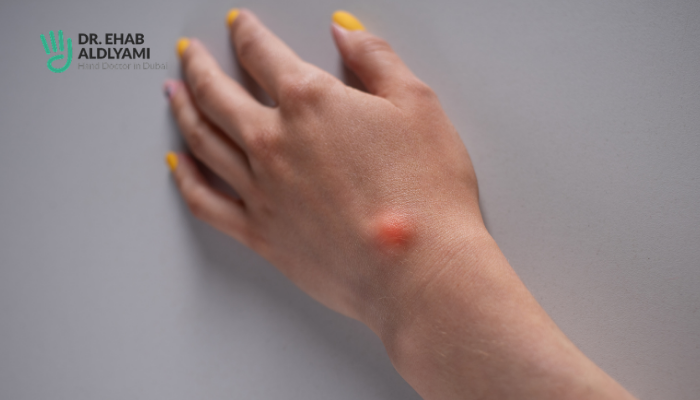
A ganglion cyst is a noncancerous, fluid-filled lump that usually develops along the tendons or joints of the wrist or hand. It is one of the most common soft tissue lumps affecting the upper extremity.
A ganglion cyst wrist and hand appears:
- On the back of the wrist (most common location)
- On the palm side of the wrist
- At the base of the fingers
- Occasionally on the palm
These cysts are filled with a thick, jelly-like fluid similar to the fluid that lubricates joints.
Is ganglion cyst dangerous?
A common concern patients have is: Is ganglion cyst dangerous?
In most cases, the answer is no. A ganglion cyst is benign and not cancerous. However, it can become painful, restrict movement, or press on nearby nerves, causing tingling or weakness. When symptoms interfere with daily activities, medical evaluation is important.
What causes ganglion cyst to form?
Understanding what causes ganglion cyst can help you better assess your risk.
Although the exact cause isn’t always clear, common contributing factors include:
- Joint or tendon irritation
- Repetitive wrist movements
- Previous injury or trauma
- Degeneration of joint tissues
- Weak spots in the joint capsule
The fluid that lubricates your joints may leak into surrounding tissue and collect, forming a visible lump.
If you’ve experienced wrist strain or injury and later notice a swelling, it could be linked to what causes ganglion cyst development.
How do you tell if a lump is a ganglion cyst?
Here are key characteristics:
Common features of a ganglion cyst
- Round or oval-shaped lump
- Smooth surface
- Can change in size over time
- May become more noticeable with activity
- Sometimes tender, sometimes painless
- Transilluminates (light may pass through it)
A ganglion cyst wrist and hand often feels firm but slightly flexible, like a water balloon under the skin.
If you’re unsure how do you tell if a lump is a ganglion cyst, a proper clinical examination and imaging such as ultrasound can confirm the diagnosis.
Other hand lumps that can mimic a ganglion cyst
Not every lump is a ganglion cyst. Several other conditions may present similarly.
- Lipoma
- Soft, fatty lump
- Usually painless
- Does not fluctuate in size like a cyst
- Giant Cell Tumor of Tendon Sheath
- Firm, slow-growing lump
- Typically does not transilluminate
- May feel more solid than a ganglion cyst
- Dupuytren’s Nodules
- Thickened cords or nodules in the palm
- May gradually cause finger bending
- Epidermoid Cysts
- Develop under the skin
- Often result from trauma
- May become inflamed
If you’re asking, Should I be worried about a lump on the palm of my hand?, the answer depends on its growth pattern, pain level, and impact on hand function. A specialist evaluation ensures accurate diagnosis.
Symptoms that should prompt evaluation
While many cysts are harmless, certain symptoms require professional assessment:
- Rapid growth
- Constant pain
- Numbness or tingling
- Weak grip
- Reduced wrist mobility
Even though patients often ask, Is ganglion cyst dangerous?, complications are rare—but untreated nerve compression can lead to functional problems.
If you’re unsure how do you tell if a lump is a ganglion cyst, it’s always safer to seek expert guidance rather than self-diagnosing.
Diagnosis: How specialists confirm the condition
An experienced orthopaedic hand surgeon evaluates:
- Size and location of the lump
- Consistency and mobility
- Impact on tendons and nerves
- Functional limitations
Imaging tools may include:
- Ultrasound – differentiates solid vs fluid-filled masses
- X-ray – rules out bone pathology
- MRI – used in complex or unclear cases
Accurate diagnosis ensures appropriate ganglion cyst treatment, especially when distinguishing from other soft tissue tumors.
Ganglion cyst treatment options
Not all cysts require surgery. The right ganglion cyst treatment depends on symptoms and patient preference.
- Observation
If the cyst is painless and not interfering with function, monitoring may be recommended. Some cysts resolve spontaneously.
- Immobilization
Reducing wrist activity may decrease cyst size in mild cases.
- Aspiration
Fluid is drained using a needle.
- Minimally invasive
- Quick procedure
- Risk of recurrence exists
- Surgical Removal
When pain, nerve compression, or recurrence persists, surgery may be the most effective ganglion cyst treatment.
Surgical excision involves removing:
- The cyst
- The stalk connecting it to the joint
This reduces recurrence risk significantly.
Should I be worried about a lump on the palm of my hand?
It’s natural to feel anxious. If you’re thinking, Should I be worried about a lump on the palm of my hand?, consider these factors:
- Is it growing quickly?
- Is it painful?
- Is it affecting hand movement?
- Has it changed in color or texture?
Most palm lumps are benign, but proper evaluation eliminates uncertainty. Early assessment ensures that if treatment is needed, it’s performed before complications develop.
Why specialized hand care matters
Hands are complex structures composed of:
- 27 bones
- Multiple joints
- Delicate nerves
- Fine tendons controlling precision movements
Treating a ganglion cyst wrist and hand condition requires more than general orthopaedic knowledge—it demands focused expertise in hand surgery.
Misdiagnosing a solid tumor as a cyst or overlooking nerve involvement can delay appropriate care.
Expert diagnosis & advanced ganglion cyst treatment with Dr. Ehab Aldlyami
With over 25 years of focused experience in hand and wrist surgery, Dr. Ehab Bassim Aldlyami provides comprehensive evaluation and advanced ganglion cyst treatment in Dubai.
His UK specialist training in Trauma & Orthopaedics and experience at the renowned Pulvertaft Hand Centre have equipped him to manage:
- Complex wrist conditions
- Tendon and nerve involvement
- Recurrent ganglion cyst cases
- Hand trauma and reconstructive procedures
Patients often arrive asking:
- How do you tell if a lump is a ganglion cyst?
- Is ganglion cyst dangerous?
- What causes ganglion cyst to keep coming back?
Through detailed assessment and precision-based surgical techniques, Dr. Ehab ensures both accurate diagnosis and tailored treatment plans.
His approach prioritizes:
- Function preservation
- Minimal scarring
- Reduced recurrence
- Faster recovery timelines
When surgery is necessary, his meticulous technique focuses on complete cyst removal while protecting surrounding structures.
👉 Book your consultation today and take the first step toward pain-free hand function.
Related Post

Ganglion Cysts vs Other Hand Lumps: How to Tell the Difference
Noticing a lump on your hand or wrist can be unsettling. You may find yourself

Common Complications of Radius Fractures and How to Avoid Them
Radius and ulna fractures are among the most common injuries seen in orthopaedic and hand

Causes of Hand Pain: From Overuse to Nerve Compression
Your hands are involved in almost everything you do, typing, lifting, cooking, driving, scrolling. So

Does Dupuytren’s Contracture Get Worse Over Time
Dupuytren’s Contracture is a slowly progressing condition that affects the hand, the connective tissue just
What Does It Feel Like When Your Scaphoid Is Broken
From Mild Ache to Lasting Pain – What a Scaphoid Break Really Feels Like! Wrist

Thumb CMC Joint Replacement: A Life-Changing Surgical Option
It would be hard to name an activity in daily life that is not affected

