

How Long Does a Broken Hand Take to Heal
A fall or a sudden knock, then swelling, throbbing pain and one pressing question: how long does it take for a broken hand to heal?
Dr. Ehab Aldlyami, a consultant orthopedic hand and wrist surgeon, explains that the bone often knits within weeks, while full strength can take months to return.
Every break is different. Before planning care, Dr. Ehab Aldlyami checks which bone is affected, whether the pieces have moved, and how the injury affects gripping, writing and typing.
Quick facts • Many hand fractures heal without surgery, using a splint, cast or strapping. • Bone knits over several weeks; strength returns more slowly. • Healing depends on the fracture type, treatment and general health. |
What happens inside the hand when a bone breaks?
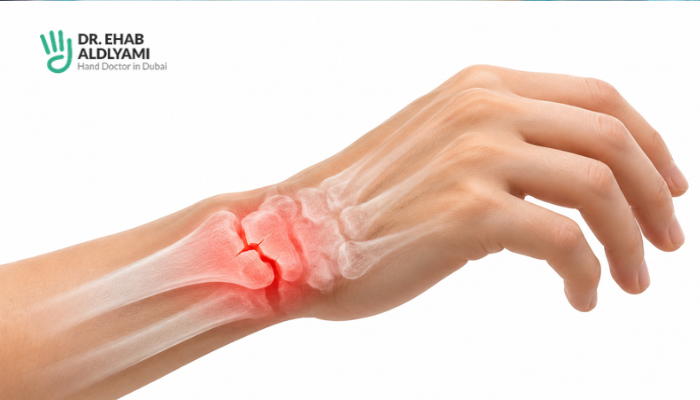
The hand’s small bones sit tightly beside tendons, nerves and joints, so even a minor break can limit movement if it heals out of line.
Common types of hand fractures
The most common types of hand fractures include:
- Hairline fractures: When slight fine cracks are mistaken for a sprain.
- Comminuted fractures: When bone is broken into many pieces.
- Phalangeal fractures: These happen in the finger bones.
- Intra-articular fractures: Fractures which extend into a joint.
- Metacarpal fractures: These break the bones of the palm, such as the boxer’s fracture.
Fractured hand signs to look out for
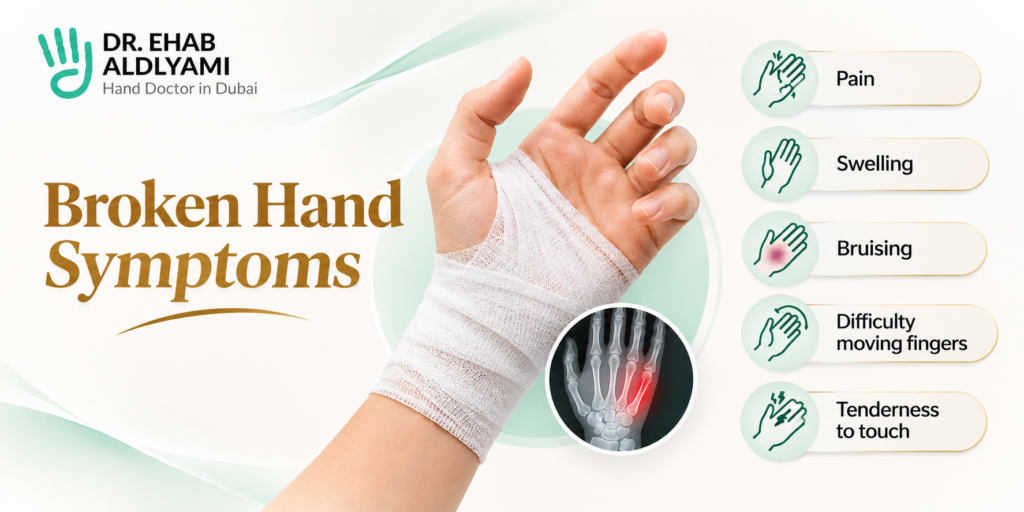
Common broken hand symptoms include pinpoint pain, swelling, bruising, a crooked finger and difficulty bending it. You might experience tenderness when you touch the injured area, as well as notice limitations in your ability to grip. A few fractures would end up giving you slight pain, which will only get worse when you move or work with your hand.
Also Read : Broken Hand – Diagnosis & Treatment
How long does it take for a broken hand to heal at each stage?
These stages overlap, so the timings are only a general guide.
Stage | Timing | What is happening |
Inflammatory phase | Weeks 1–3 | A clot forms, swelling peaks and the hand is protected. |
Reparative phase | Weeks 3–6 | Soft new tissue (callus) bridges the gap and hardens into bone. |
Clinical union | Weeks 6–8 | The break is no longer tender on examination; light use often becomes possible. |
Remodeling and full strength | Month 3 onward | The bone reshapes and strengthens as grip improves. |
What can change how long it takes for a broken hand to heal?
The type and location of the fracture
Breaks that enter a joint or split into pieces usually need more careful management.
Treatment method
Splinted and surgically fixed fractures follow different recovery plans.
Your general health
Smoking, poor nutrition, diabetes and thinning bones (osteoporosis) can slow repair.
Important to know: Moving the fingers does not rule out a fracture. Only an X-ray can confirm a break. |
What treatments are available to help a broken hand heal?
Care starts with an examination and X-rays, with CT or MRI scans for more complex injuries.
- Splint or cast: It aids in keeping the bones in place as they heal. It also helps raise the hand to reduce swelling.
- Buddy strapping: Taping the injured finger to the one next to it. This will support it whilst allowing for some gentle movement.
- K-wire fixation: Thin metal wires hold unstable fragments in place. They keep the bone aligned during healing.
- Controlled early movement: Very gentle exercises within comfortable limits. The aim is to keep the joints moving as the bone heals.
- Hand therapy: Rehabilitation with a specialist therapist. Involves specific exercises to rebuild strength and grip.
- Fracture fixation: Surgery for rotated, badly angled or open fractures. The bone is realigned and then held in place for healing.
- Care after surgery: Scar management will help the wound settle. Wires or plates can be removed at a later date if they’re causing any irritation.
Why does rehabilitation affect how long it takes for a broken hand to heal?
A straight-healed bone can still leave a stiff hand if tendons catch in scar tissue. A typical fracture in hand recovery time moves through four goals:
Recovery stage | Main focus |
Protection | Splint, cast or strapping keeps bones aligned |
Early movement | Gentle, comfortable exercises |
Strengthening | Rebuilding grip and dexterity |
Return to activity | Gradual return to work and sport |
Patient tip: Keep the hand raised above heart level for the first few days to ease swelling.
When should a broken hand be seen urgently?
- A finger that looks crooked or rotated
- Bone or a wound breaking the skin
- Numbness, tingling or pale, cold fingers
- Severe or worsening pain and swelling
How long will it take for your broken hand to heal?
A reliable answer to how long does it take for a broken hand to heal comes from a careful specialist assessment.
Start with a consultation: Dr. Ehab Aldlyami is a UK-trained hand and wrist surgeon with more than two decades of experience and Vice President of the Emirates Hand Surgery Society. He treats hand, wrist and scaphoid fractures, sports injuries, arthritis, tendon disorders, nerve compression and ganglions, favoring non-surgical care where suitable.
Schedule an Appointment today!
FAQs
Sometimes, yes. Moving the fingers does not rule out a break, so pain, swelling or tenderness after an injury should be checked with an X-ray.
A crooked finger, numbness, cold fingers or bone breaking through the skin need urgent medical attention. Waiting for these signs to settle is not advisable.
Not always. Many hand fractures heal with a splint, cast or strapping. Surgery is usually considered when bones are rotated, badly angled or breaking through the skin.
It will depend on the injury and the job. Desk work may be possible much sooner than manual work, which will obviously require a lot more strength and will need the specialist’s clearance first.
Joints and tendons can tighten after weeks of protection. Hand therapy helps restore movement, although improvement may continue gradually over several months.
Yes. Nicotine reduces blood flow to healing bone and may delay repair. Stopping smoking and eating a balanced diet can both support recovery.