

Scaphoid fracture: Causes, symptoms & treatment options

scaphoid bone fracture

In the world of hand and wrist injuries, few conditions are as deceptively subtle yet potentially devastating as a scaphoid fracture. This small, critical bone in your wrist is essential for movement and stability, yet its unique anatomy makes it notoriously difficult to heal—and easy to miss.

As a specialist in hand and wrist surgery in Dubai, Dr. Ehab Aldlyami often treats cases where patients initially dismissed their injury as a simple sprain. Dr. Ehab Aldlyami believes that awareness is the first line of defense.

Understanding the signs of a scaphoid bone fracture and the risks of delayed treatment is vital for a successful recovery and preserving long-term wrist function. If you’ve experienced a wrist injury, especially after a fall, here is everything you need to know about this complex fracture.

What is a scaphoid fracture?

The scaphoid is one of eight small bones (carpal bones) located in your wrist, situated directly beneath your thumb. Its crescent shape and central position allow it to play a crucial role in the movement and alignment of your wrist joint.

Most scaphoid fractures occur through one specific mechanism: A fall onto an outstretched hand (FOOSH). When you instinctively throw your hand out to break a fall, the force of the impact travels up the arm and concentrates right onto the scaphoid bone, causing it to fracture.

This injury is widespread in athletes (skateboarding, snowboarding, football) and individuals involved in motor vehicle accidents.

Recognizing the scaphoid symptoms and the snuffbox test

One reason the scaphoid fracture is so problematic is that its initial scaphoid symptoms often mimic those of a simple wrist sprain, leading many patients to avoid seeking specialist care. Key symptoms include:

  • Pain and swelling: Discomfort starts at the base of the thumb and usually extends outward into the wrist area.
  • Difficulty gripping: Weakness or pain when attempting to grasp objects.
  • Limited motion: Painful limitation of wrist movement.

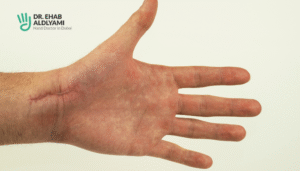
The most critical diagnostic indicator is tenderness in the anatomical snuffbox. This is the triangular depression on the back of your hand, visible when the thumb is extended. If you press firmly into this area and feel sharp pain, it is a highly positive sign of a scaphoid injury.

Because standard X-rays may not reveal the fracture immediately (especially in the first week), an expert’s clinical examination, combined with advanced imaging techniques like CT scans or MRI, is essential for an accurate scaphoid fracture test.

The danger of delay: Scaphoid fracture complications

Ignoring the signs or misdiagnosing the injury as a sprain can have severe, long-term consequences due to the scaphoid’s unique and delicate blood supply. The scaphoid receives blood primarily from its distal end (closest to the fingers). 

The blood supply to the fractured piece is often severed when a fracture occurs in the middle or proximal pole (the end closest to the forearm). This anatomical vulnerability leads to two major scaphoid fracture complications:

1- Nonunion (Failure to heal): If the bone fragment doesn’t receive enough blood, it cannot bridge the fracture gap, leading to a permanent failure to heal.

2- Avascular necrosis (AVN): A lack of adequate blood supply is the reason for the death of the bone tissue. The bone collapses, leading to chronic pain, arthritis, and eventual collapse of the wrist joint.

What happens if a scaphoid fracture is left untreated?

Untreated fractures have a high probability of resulting in painful nonunion or AVN, often requiring complex reconstructive surgery later on. This is why immediate specialist consultation is non-negotiable.

Tailored scaphoid fracture treatment options

The best course of treatment for a scaphoid fracture depends entirely on the location of the fracture on the bone and whether the fragments are displaced (moved apart).

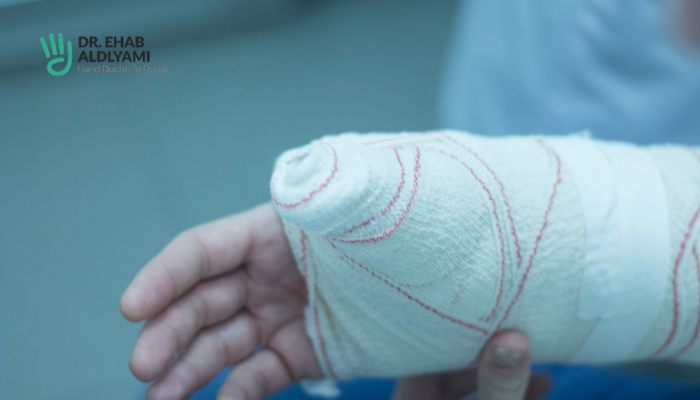
1. Non-surgical treatment (Casting): For fractures that are stable and non-displaced (the fragments remain aligned), treatment typically involves immobilization in a cast that includes the thumb. 

Due to the slow healing rate, this cast may be required for 6 to 12 weeks or even longer. Success requires meticulous adherence to the immobilization period.

2. Surgical treatment: Surgery is typically advised under these circumstances:

  • The fracture is displaced (fragments have moved).
  • The fracture is located in the proximal pole (high risk of nonunion).
  • The fracture has already resulted in nonunion or AVN.

The procedure involves a small incision to realign the bone fragments and secure them internally, typically using a specialized screw or pins. 

For nonunion cases, Dr. Ehab Aldlyami often utilize a bone graft—either from the patient’s own wrist or an external source—to provide structural support and blood supply, promoting successful healing.

As a hand specialist,  Dr. Ehab Aldlyami favor minimally invasive techniques whenever possible to reduce soft tissue damage, minimize scarring, and promote a faster return to function.

Don’t delay: Prioritize your wrist health

If you have injured your wrist, particularly after a fall, and experience persistent pain in the anatomical snuffbox, please do not assume it is “just a sprain.” Time is a crucial factor in treating a scaphoid fracture.

Early diagnosis and expert scaphoid fracture treatment are the only ways to ensure proper healing and prevent debilitating, long-term complications like arthritis. 

For an accurate diagnosis and a customized path to optimal wrist recovery, book your consultation with Dr. Ehab Aldlyami immediately.

scaphoid bone fracture

Related Post

Contact Us